Author
Bowtie Team
Updated on
2025-07-09
Disclaimer: This article is translated with the assistance of AI.
Preparing for marriage involves a long to-do list, and one of the most overlooked yet crucial items is considering insurance.
After tying the knot, everything from daily expenses (like rent or mortgage payments) to medical costs during illness can impact both you and your partner’s quality of life, potentially derailing your plans. Buying insurance helps transfer some of these risks to the insurer. So, even if an accident happens or health issues arise, it can reduce financial burdens and help maintain your lifestyle as much as possible.
Generally, couples preparing for marriage can consider the following types of insurance products:
If you and your partner already have medical insurance, it can cover treatment costs (like surgeries) in case of illness or accidents requiring hospitalization, so you don’t have to bear the full expense. But with so many options out there, which one should you pick? Here are two common scenarios to guide you:
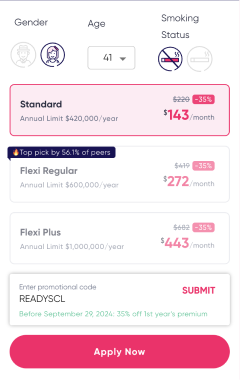
If one (or both) of you has company medical insurance (also known as group medical insurance), the covered party (or both) can consider a plan with a deductible (self-payment amount) such as the Bowtie Pink plan.
Even if illness strikes and tests or treatments are needed, company insurance can offset all or part of the deductible, while the remaining costs can be fully reimbursed# through Bowtie Pink. This means you won’t have to worry about hefty medical bills disrupting your life.
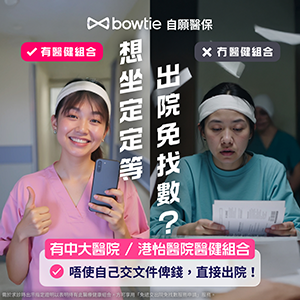
On the other hand, if you or your partner (or both) lack company medical insurance, the uncovered party (or both) can consider the Bowtie VHIS Flexi Regular/Plus , and add on the GHK Wellness Package for just HK$200 per month (uniform rate for all ages). Once enrolled, patients undergoing designated medical packages (over 240 options) at Gleneagles Hospital, including check-ups and surgeries, can receive full reimbursement^.
In reality, the medical insurance mentioned earlier only covers hospitalisation expenses. If a patient suffers from a severe illness (like stroke, cancer, or heart disease), they may still need a long recovery period after discharge before they can return to work.
Imagine if you or your partner couldn’t work for a while due to a serious illness. Daily expenses (like rent, mortgage payments, investment contributions, or debt repayments) would still need to be managed. By purchasing critical illness insurance beforehand, if the insured is diagnosed with any specified critical illness (such as heart disease, cancer, or stroke), they can receive a lump-sum payout. This payout has no usage restrictions, easing the financial burden of daily expenses.
Additionally, some critical illnesses (like heart disease) may recur. If you’re concerned about this risk, consider a critical illness plan with multiple claims. For instance, Bowtie Term CI Multiple Cover offers up to 5 claims in total, ensuring protection even if the illness recurs.
How Much Critical Illness Coverage Is Enough?
We recommend a coverage amount of at least 2 to 3 times the insured’s annual salary. Even if the insured needs to rest at home after discharge, the payout should be sufficient to support or subsidise daily living expenses.
The main reason soon-to-be-married couples need life insurance is to safeguard their family’s financial security. If one spouse passes away unexpectedly, the other may struggle to cover daily expenses and living costs due to the sudden loss of primary income, potentially even falling into debt.
By purchasing life insurance, you ensure that a lump-sum payout is available if one spouse passes away. This sum can be used to cover daily expenses, repay debts, or fund children’s education.
Take Bowtie Term Life as an example. It’s a term life insurance product without a savings component. For the same coverage amount, Bowtie Term Life can save you 28% on premiums*, making it ideal for newlyweds starting to pay off a mortgage or rent.
Moreover, Bowtie Term Life offers flexibility with annual renewals (guaranteed up to age 85). If cash flow becomes tight, you can choose to cancel before renewal without worrying about additional investment losses from missed payments.
As for coverage amount, every family’s situation is unique. Beyond factoring in daily expenses and long-term debts, you might consider setting the coverage based on the total value of jointly owned assets under mortgage. If you or your partner is currently unemployed, you may need to increase the coverage amount.
Let’s take a look at examples for couples aged 25, 30, and 35. Below is a table showing the monthly premium expenses for a two-person household for your reference:
| Assuming both male and female are non-smokers
Same age: |
VHIS
|
Bowtie Term Life^ | Term CI Multiple Cover^ | Monthly Premium for Two |
| 25 years old |
|
$74 | $192 | As low as $660 |
| 30 years old |
|
$67 | $278 | As low as $785 |
| 35 years old |
|
$106 | $374 | As low as $958 |
If you’re purchasing critical illness or life insurance, either spouse can be the policyholder. However, for VHIS, it’s recommended that the higher earner be the policyholder. This is because the eligible VHIS premiums paid by the policyholder can be tax-deductible, allowing for greater tax savings.
Generally, beneficiaries need to be specified only for life insurance and critical illness insurance. For life insurance, married individuals often choose their spouse as the primary beneficiary. This ensures that if one spouse passes away, the surviving spouse receives the payout to maintain their standard of living. The insured can also allocate a percentage of the coverage to others (such as children or relatives), ensuring the payout is distributed as intended.
It’s worth noting that some critical illness policies include a compassionate death benefit, so beneficiaries must also be specified when applying for such coverage.

© 2026 Bowtie Life Insurance Company Limited. All rights reserved.