Hospitals
Hospitals

Public Hospital Fees: 2026 Updated Costs for Outpatient, Emergency & Exams

Author Bowtie Team
Updated on 2025-12-05


~Exclusive Blog Offer~
Sales Up To 65% first year's premium!
Save up on your first year's premium now until Dec 11! (Enjoy extra coverage with our wellness package for just HK$100/month in the first year!)

Latest News: Public Healthcare Fee Reforms to Take Effect on January 1, 2026

The government announced adjustments to Hong Kong’s public healthcare fees on March 25, 2025, and October 31, 2025, respectively. On November 8, 2025, further changes were made to mortuary fees based on public feedback. These fees and arrangements will come into effect on January 1, 2026. Below is a summary of the key announcements from these three dates:

March 25, 2025

  • The core plan includes waiving admission fees for hospital stays, increasing daily inpatient fees, raising A&E fees from $180 to $400, and introducing tiered charges for tests and diagnostics.
  • A new annual medical expense cap of $10,000 to ease the burden on patients with chronic or serious illnesses.
  • Enhanced medical waiver mechanisms, expanding eligible beneficiaries from about 300,000 to an estimated 1.4 million people, with relaxed application criteria.
  • Implementation in phases, with the first phase starting on January 1, 2026.

October 31, 2025

  • Increases in private service fees.
  • Enhanced medical waiver mechanisms, expanding eligible beneficiaries from about 300,000 to an estimated 1.4 million people, with relaxed application criteria.
  • Implementation in phases, with the first phase starting on January 1, 2026.

November 8, 2025

  • The original mortuary fee plan was: free for the first 3 days, $100 per day from day 4 to 17, $200 per day from day 18 to 33, and $550 per day from day 34 onward.
  • Due to public backlash, the government revised the plan, extending the free storage period from 3 days to 28 days, with $200 per day from day 29 onward and $550 per day from day 36 onward, meaning most families won’t have to pay for handling affairs.

Comparison of Public Healthcare Fees Before and After Reforms

A&E Department


Current Fees

Fees After Reforms (Effective January 1, 2026)

Fee Change

$180
  • Critical and urgent patients: Free
  • Emergency, semi-emergency, and non-emergency patients: $400
  • Critical and urgent patients: -$180
  • Emergency, semi-emergency, and non-emergency patients: +$220
General Outpatient Clinics


Fee Item

Current Fees

Fees After Reforms (Effective January 1, 2026)

Fee Change

Consultation fee per visit

$50

$150

+$100

Per medication

Free

$5, with up to a 4-week supply per medication

+$5
Specialist Outpatient Clinics


Fee Item

Current Fees

Fees After Reforms (Effective January 1, 2026)

Fee Change

Initial consultation

$135

$250

+$115

Subsequent visits

$80

$250

+$170

Per medication

Free

$20, with up to a 4-week supply per medication

+$20
Admission/Inpatient Fees


Fee Item

Current Fees

Fees After Reforms (Effective January 1, 2026)

Fee Change

Acute bed – Admission fee

$75

Free

-$75

Acute bed – Inpatient fee (per day)

$120

$300

+$180

Day procedures and treatments – Admission fee

$75

Free

-$75

Day procedures and treatments – Inpatient fee (per day)

$120

$250

+$130

Convalescent/rehabilitation, nursing, and psychiatric beds – Inpatient fee (per day)

$100

$200

+$100
Pathology Testing Services

Pathology testing services will shift from being free to a three-tier fee structure, categorized into basic, advanced, and premium items:


Fee Item

Current Fees

Fees After Reforms (Effective January 1, 2026)

Fee Change

Basic items
Free

Free

No change

Advanced items

$50

+$50

Premium items

$200

+$200
Non-Emergency Radiology Services

Non-emergency radiology services will also change from free to a three-tier fee structure, divided into basic, advanced, and premium items:


Fee Item

Current Fees

Fees After Reforms (Effective January 1, 2026)

Fee Change

Basic items

Free

Free

No change

Advanced items

$250

+$250

Premium items

$500

+$500
Private Services Fees


Fee Item

Current Fees

Fees After Reforms (Effective January 1, 2026)

Fee Change
Private outpatient clinics
  • Initial consultation: $790 – $2,210 (per visit)
  • Follow-up: $640 – $1,990 (per visit)
  • Initial consultation: $1,090 – $2,580 (per visit)
  • Follow-up: $950 – $2,350 (per visit)
  • Initial consultation: +$300 – +$370 (per visit)
  • Follow-up: +$310 – +$360 (per visit)
Inpatient fees (acute hospitals)
  • First class: $6,650 (per day)
  • Second class: $4,430 (per day)
  • First class: $6,960 (per day)
  • Second class: $4,640 (per day)
  • First class: +$310 (per day)
  • Second class: +$210 (per day)
Inpatient fees (other hospitals)
  • First class: $6,120 (per day)
  • Second class: $4,080 (per day)
  • First class: $5,810 (per day)
  • Second class: $3,870 (per day)
  • First class: -$310 (per day)
  • Second class: -$210 (per day)
Minor nursing procedures (e.g., dressings or injections)
$360 (per procedure)
$450 (per procedure)
+$90
Intensive care unit
$15,350 (per day)
$22,450 (per day)
+$7,100
High dependency unit
$9,500 (per day)
$12,650 (per day)
+$3,150
Neonatal care unit
$1,190 (per day)
$2,630 (per day)
+$1,140

Public Healthcare Service Fees at a Glance

Public Healthcare Fees for 2025


Public Hospital
aims to serve the public, so public fees are generally cheaper than private services. Public fees are divided into “eligible” and “ineligible” individuals, with the following differences:


Service

Eligible Individuals

Ineligible Individuals/Non-Hong Kong Residents

Emergency Room

$180 (per visit)

$1,230 (per visit)

General Outpatient

$50 (per visit)

$445 (per visit)

Specialist Outpatient
  • Initial consultation: $135
  • Subsequent visits: $80
  • Per medication: $15

$1,190 (per visit)

Hospitalization Fees

Acute care bed

  • Admission fee: $75
  • $120 (per day)


Convalescent / Rehabilitation, nursing, and psychiatric beds

  • $100 (per day)
  • General hospital: $5,100
  • Psychiatric hospital: $2,340

Geriatric Day Hospital

Not displayed on the official website

$24,400 (per day)

Psychiatric Day Hospital

$60

$1,260 (per visit)

Rehabilitation Day Hospital

$55

$1,320 (per visit)

Community Nursing Services (General)

$80

$535 (per visit)

Intensive Care Unit

Not displayed on the official website

$24,400 (per day)

Private Services Fees


Service

Fees

Private Outpatient

Initial consultation: $790 – $2,210 (per visit)

Follow-up: $640 – $1,990 (per visit)

Hospitalization Fees (Acute Hospital)

First class: $6,650 (per day)

Second class: $4,430 (per day)

Hospitalization Fees (Other Hospitals)

First class: $6,120 (per day)

Second class: $4,080 (per day)

Intensive Care Unit

$15,350 (per day)

High Dependency Unit

$9,500 (per day)

Nursery

$1,190 (per day)

In-Hospital Doctor Rounds/Treatment Fees (Per Specialty)

$680 – $2,780 (per consultation)

Minor Nursing Procedures (e.g., Dressing or Injection)

$360 (per procedure)

CT Scan

$740 – $5,480

MRI Scan

$3,000 – $20,000
Public Healthcare Fees After Reform (Effective from January 1, 2026)

The government announced adjustments to public healthcare fees on March 25, 2025, which include eliminating admission fees, adjusting daily hospitalization fees, and changing emergency room fees from a flat $180 to a two-tier system. Currently free pathology testing services and non-emergency radiology services will also adopt a three-tier fee structure.


Additionally, the government is introducing an annual fee cap of $10,000 per person for all fee items, excluding self-paid medications and devices.

Authorities estimate that around 70,000 patients with chronic conditions requiring frequent hospital services will benefit.

The public healthcare fee reform will take effect on January 1, 2026:


Service

Eligible Individuals

Emergency Room
  • Free (only for critical and urgent patients)
  • $400 per visit (for emergency, sub-emergency, and non-emergency patients)

General Outpatient
  • Consultation fee: $150 per visit
  • Per medication: $5 (up to four weeks)

Specialist Outpatient
  • Initial consultation: $250
  • Subsequent visits: $250
  • Per medication: $20 (up to four weeks)

Hospitalization Fees
  • Acute care bed: $300 (per day)
  • Day treatment and nursing: $250 (per day)
  • Convalescent / Rehabilitation, nursing, and psychiatric beds: $200 (per day)

Geriatric Day Hospital

$100

Rehabilitation Day Hospital

$100

Psychiatric Day Hospital

Free

Community Nursing Services (General)

$100

Intensive Care Unit

Not displayed on the official website

Pathology Testing Services
  • Basic items: Free
  • Advanced items: $50
  • Premium items: $200

Non-Emergency Radiology Services
  • Basic items: Free
  • Advanced items: $250
  • Premium items: $500

Private Services Fees


Service

Fees

Private Outpatient

Initial consultation: $1,090 – $2,580 (per visit)

Follow-up: $950 – $2,350 (per visit)

Hospitalization Fees (Acute Hospital)

First class: $6,960 (per day)

Second class: $4,640 (per day)

Hospitalization Fees (Other Hospitals)

First class: $5,810 (per day)

Second class: $3,870 (per day)

Intensive Care Unit

$22,450 (per day)

High Dependency Unit

$12,650 (per day)

Nursery

$2,630 (per day)

In-Hospital Doctor Rounds/Treatment Fees (Per Specialty)

$680 – $2,780 (per consultation)

Minor Nursing Procedures (e.g., Dressing or Injection)

$450 (per procedure)

CT Scan

$740 – $5,480

MRI Scan

$3,000 – $20,000

It’s worth noting, VHIS coverage isn’t limited to private hospitals! Even eligible expenses from hospitalization and treatment in public hospitals can be reimbursed.

Who Qualifies for Public Hospital Services? How Are Non-Residents Charged?


According to the
Hospital Authority‘s definition, only individuals meeting the following criteria can pay at the eligible rate:

  • Holders of a Hong Kong ID card (except those that have expired or are no longer valid)
  • Children under 11 years old who are Hong Kong residents
  • Other persons approved by the Hospital Authority’s Chief Executive

Individuals outside these categories are considered ineligible, including non-Hong Kong residents, and should pay at the non-qualified persons rate.

Which Patients Can Be Hospitalized or Treated for Free?


If suffering from the following
diseases, patients do not need to pay any medical or hospitalization fees for admission to public hospitals:

  1. New subtype virus-induced human influenza
  2. Poliomyelitis caused by wild poliovirus strains
  3. Severe Acute Respiratory Syndrome (SARS)
  4. Smallpox
  5. Cholera (and other epidemic intestinal infectious diseases)
  6. Pneumonic plague
  7. Viral hemorrhagic fevers (Ebola, Lassa fever, Marburg fever, West Nile fever)
  8. Yellow fever

Top 10 Common Surgery Charges in Public Hospitals (Private Services)

  • *The above fees include the surgeon, anesthesiologist, drugs used in the surgery, and operating room fees. Special consumables used by individual patients, such as implants, prosthetic human organs and devices, as well as disposable laparoscopic instruments used in surgery, will be charged separately.
  • *The above fees are for reference only. Please contact the Hospital Authority for detailed and latest charges.

6 Major Payment Methods Approved by the Hospital Authority

1. In-Person Payment

You can bring the bill and visit the accounting department of a Hospital Authority hospital during office hours to pay with a check, cash, Octopus card, “EPS” (Easy Payment System), or credit card (VISA, MasterCard, UnionPay, or JCB).

2. By Mail

Send a crossed check, bank draft, or cashier’s order to the accounting department of the hospital listed on the bill. Make it payable to “Hospital Authority.” Remember to write the patient’s name and bill number on the back of the check, bank draft, or cashier’s order, and allow sufficient time for mailing.

3. PPS (Payment by Phone Service)

After opening an account at a PPS terminal, you can call 18033 or log in to the website www.ppshk.com to make the payment. The Hospital Authority’s PPS merchant code is: 83

4. Online Banking Services

Use the online banking services provided by your bank to make the payment.

5. Bank ATM

Use any JETCO member bank’s ATM card or a credit card with withdrawal function at any ATM displaying the “JETCO Payment” logo to make the payment. The Hospital Authority’s JETCO Payment ATM merchant code is: 9083
(Account type: 01).

6. Cash Payment at 7-Eleven Stores

You can also bring the bill or account summary to any 7-Eleven store in Hong Kong to pay with cash. The maximum payment per transaction is $5,000.

7. Faster Payment System (FPS)

You can use a mobile app from a bank or stored-value facility operator that supports FPS QR codes to scan the FPS QR code printed on the bill or outstanding balance statement to make the payment.


Please note, starting from July 1, 2007, anyone who owes public hospital medical fees (60 days after the invoice date) will be charged an additional administrative fee of 5% to 10%
.

How are physiotherapy services charged at public hospitals?

Physiotherapy services at public hospitals fall under specialist outpatient services. Eligible individuals pay HK$135 for the first consultation and HK$80 for subsequent visits. Non-eligible individuals or non-Hong Kong residents pay HK$1,190 per visit.

How are fees charged for domestic helpers at public hospitals?

According to the Registration of Persons Ordinance, domestic helpers holding a Hong Kong ID card are considered “eligible individuals” and will be charged accordingly. For domestic helpers, emergency room visits cost HK$180 per visit, and general outpatient visits cost HK$50 per visit.

Can elderly people get fee waivers at public hospitals?

Elderly individuals aged 75 or above who receive the Higher Old Age Living Allowance can get a waiver for public healthcare service fees by notifying hospital or clinic staff during registration and presenting their ID documents.

How are medication fees calculated at public hospitals?

For eligible individuals, inpatient and outpatient fees already include medication costs, while prescribed medications at specialist clinics cost HK$15 per item.

Should I Get VHIS for Public Hospital Visits?

Public hospitals often have overwhelming waiting lists, with emergency room waits stretching up to 8 hours—or at least 2 hours at the shortest. Bed occupancy rates frequently exceed 100%, and some hospitals even hit 120%. For chronic conditions, follow-up appointments can take anywhere from 6 months to a year, or even up to 3 years, potentially delaying critical care. With the immense pressure on healthcare staff, it’s no surprise that service quality might suffer. That’s why having VHIS or another health insurance can open up more options beyond public services, helping you safeguard your and your family’s health.


What Makes Bowtie VHIS Flexi Plan Great?


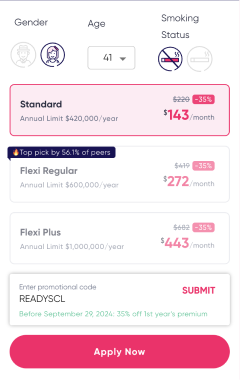
🌟Premiums as low as $218 per month*


🌟$0 deductibles  to claim nearly 90% of medical expenses

🌟Exclusive BowtieCash rewards program (for any remaining medical expenses after claims)

  • *Based on a 30-year-old male, non-smoker
  • *Above calculation’s premium is for reference only; your actual premium may vary due to factors like time, inflation, underwriting, and includes the levy charged by the Insurance Authority—please download and refer to the standard premium table (Standard/Flexi Regular/Flexi Plus)

⭐️ VHIS + Critical Illness Insurance: Why You Need Both!

First, everyone needs to understand

the functions of medical insurance and critical illness insurance are different:
  • Medical insurance: in on a reimbursement basis, provides compensation for eligible medical expenses
  • Critical illness insurance: if the insured unfortunately suffers from a specified serious illness, it provides compensation
    in a lump-sum form to cover the insured’s living expenses during the period of illness-related absence from work, allowing the insured to focus on treatment and recovery

Therefore, if you unfortunately suffer from a critical illness, having only medical insurance can cover your medical expenses, but it might not address the long-term issues you’ll face due to the illness. In reality, when you have a critical illness, even if it’s not life-threatening, it often forces you to stop working and lose income, which can affect your quality of life and disrupt your existing plans.

Since the coverage of medical insurance and critical illness insurance doesn’t overlap, a reliable critical illness insurance can replace the income you lose while you’re out of work, providing financial support and reducing the impact on your family, so you can maintain your original quality of life.


In fact, even if you can’t purchase new insurance after falling ill, the critical illness compensation can help you continue paying for your existing medical insurance premiums when necessary.

Critical illness insurance is absolutely an essential form of protection—beyond medical insurance, its importance shouldn’t be overlooked. In any situation, as long as you have a stable income, you should seriously consider getting a critical illness policy for an extra layer of security.

Bowtie Pink Blog Promo!

Tired of sky-high private hospital bills but hesitant about purchasing VHIS? Bowtie Pink provides full coverage*, with long-term premiums are substantially lower than market rates^.

For a limited time, use the exclusive Bowtie Blog promo code【BLOGENGINSURE】to get an impressive 65% in first year’s premium and secure top-tier health protection at an unbeatable price!


*Full coverage shall mean no itemized benefit sub-limits, and applies to designated benefit items only. The benefit payable shall be subject to the remaining deductible (if applicable), annual benefit limit, lifetime benefit limit and other limitations such as reasonable and customary charges, a pre-existing condition, “List of Designated Hospitals in Mainland China” and receiving medical treatment in the United States. For detailed terms and conditions, product risks, and exclusions, please refer to the relevant product website and policy.
^For example, with Bowtie Pink (Ward) and the deductible option HK$80,000, the monthly premium for a 30-year-old non-smoker is HK$197. The premium comparison above is based on similar medical insurance plans with the ward level (data source on 27, July 2023), HK$50,000 to HK$80,000 deductibles, for a 30-year-old non-smoker. Different medical insurance plans have different coverage and benefit limits. For details, please refer to the relevant insurance policy and its terms and conditions.

  • This article’s content related to Bowtie products is for reference and educational purposes only. Customers should refer to the detailed terms and conditions on the relevant product webpages.


Related Articles

Complete Guide to Gleneagles Hospital Hong Kong 2023 Complete Guide to Gleneagles Hospital Hong Kong 2023
Hospitals

Complete Guide to Gleneagles Hospital Hong Kong 2023

Private Hospitals in Hong Kong - Overview of Outpatient and Inpatient Charges Private Hospitals in Hong Kong - Overview of Outpatient and Inpatient Charges
Hospitals

Private Hospitals in Hong Kong - Overview of Outpatient and Inpatient Charges

Complete guide to Union Hospital 2023 Complete guide to Union Hospital 2023
Hospitals

Complete guide to Union Hospital 2023

Enter Promo Code [BLOGENGINSURE] when purchasing VHIS on or before 11 Dec to enjoy 65% off first years' premium!
Quote now

Other Topics

Email

General Enquiry
hello@bowtie.com.hk
Media Enquiry
media@bowtie.com.hk
Partnership
partner@bowtie.com.hk

© 2025 Bowtie Life Insurance Company Limited. All rights reserved.
Your Browser is outdated. To have a better user experience, please upgrade or change another browsers. OK