Author
Bowtie Team
Updated on
2025-06-12
Disclaimer: This article is translated with the assistance of AI.
Many people have doubts about whether seniors need medical insurance. The main purpose of medical insurance is to reimburse the insured for eligible medical expenses incurred from hospitalization or day surgery on a reimbursement basis. Therefore, anyone facing health risks has the need for medical insurance .
Is it too late to buy insurance at 70 or 80 years old? Actually, even for seniors aged 70 or 80, as long as they can successfully get through underwriting, it is never too late. Remember, the purpose of buying medical insurance to transfer some health risks to the insurance company , and as long as the premiums are affordable, it is still a wise decision for seniors to get medical insurance.
Some seniors might think they can just go to public hospitals for treatment, so they don’t need medical insurance. However, the long waiting times at public hospitals could delay treatment ; and medical expenses at government hospitals can also be substantial.
For example, the heart stents required for angioplasty surgery or certain targeted drugs used in cancer treatment may need to be paid out-of-pocket.
In these situations, patients without medical insurance would have to cover the high treatment costs themselves, and in the worst case, they might even be forced to forgo treatment.
Of course they can. Compared to traditional medical insurance, which has a maximum enrolment age of only 65 or 70 years, VHIS sets the maximum enrolment age at 80 years , providing greater flexibility for the elderly.
Insurance companies assess the applicant’s health condition and medical history to determine medical insurance premiums based on the level of underwriting risk. Generally, since seniors often have poorer health than younger people and tend to have more medical records as they age, their medical insurance premiums are usually higher.
Although medical insurance costs more for seniors, it is still worth buying , mainly for the following reasons:
As people age, bodily functions tend to decline, and even if serious diseases are avoided, most individuals by 70 or 80 years old will have chronic conditions such as Three Highs , indicating that the risk of serious diseases like cancer, heart disease, and kidney disease increases with age, making medical protection even more necessary in later years.
Many seniors believe they can rely solely on the public healthcare system due to its low costs, such as a few hundred dollars for a few days of hospitalisation and surgery. However, public hospitals are often operating at high capacity (or even overload), resulting in long waiting times for new cases and surgeries . For example, cataract surgery and total joint replacement have average waiting times of up to 2.5 years and over 4 years, respectively.
Furthermore, even when treated at public hospitals, certain items still require out-of-pocket payment. For instance, as mentioned earlier, “angioplasty” requires heart stents that can cost tens of thousands of dollars or more; and some cancer targeted drugs also need to be paid by the patient themselves. I previously shared a real case of an elderly breast cancer patient who still had to pay HK$190,000 out-of-pocket for targeted drugs even after receiving subsidies, as in this real case .
If seniors have medical insurance, they can choose to seek treatment at private hospitals, avoiding delays that could worsen their condition, and the costs of medical materials or targeted drugs can also be covered.
When seniors have health issues, seeking treatment at private hospitals is the quickest option, but private healthcare in Hong Kong is expensive. Some common surgeries can cost tens of thousands to over a hundred thousand dollars (as shown in the table below), not to mention the annual medical inflation rate of over 8%. If you have medical insurance, the reimbursement can provide some financial support.
| Common Surgeries | Surgery Costs Can Reach Up To |
| Cholecystectomy | $191,000 |
| Fracture Surgery | $176,000 |
| Breast Lump Removal Surgery | $126,000 |
Most seniors have already retired, so they no longer have employer-provided company medical insurance or benefits, and they also lack active income. Without medical insurance as a backup, facing heavy and ongoing medical expenses due to illness would be difficult to sustain.
Without medical insurance, many elderly patients have to use their retirement savings to cover medical and rehabilitation expenses, which can disrupt original retirement plans such as traveling the world, buying property abroad, or investment plans. In severe cases, it could lead to debt due to medical costs or require help from children, relatives, or friends, becoming a burden on those around them.
Many seniors may have Three Highs and other health issues, or past illnesses or injury history, resulting in “Loading” (charging extra premiums) or/and an increase of the policy’s “exclusions” (for example, not covering conditions related to past medical history for certain organs or limbs).
If the premium is still at a level the policyholder can afford, purchasing medical insurance is still a wise decision .
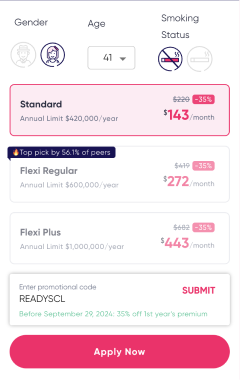
The Bowtie team has provided premium information and recommendations for seniors purchasing voluntary medical insurance:
Therefore, if you are unfortunately diagnosed with a critical illness, having only medical insurance may cover your medical costs but not the long-term issues you face. In reality, a critical illness diagnosis, even if not fatal, often forces you to stop working and lose income, which can affect your quality of life and disrupt your existing plans.
Since medical insurance and critical illness insurance provide complementary coverage, a reliable critical illness insurance policy can replace lost income during your absence from work, providing financial support and reducing the impact on your family, while maintaining your original quality of life.
Even if you cannot buy new insurance after falling ill, critical illness compensation can help you continue paying premiums for your existing medical insurance when necessary.
Critical illness insurance is absolutely an important protection. Besides medical insurance, the importance of critical illness insurance cannot be ignored. In any situation, as long as you have a stable income, you should actively consider purchasing a critical illness policy to give yourself an extra layer of protection.

© 2026 Bowtie Life Insurance Company Limited. All rights reserved.