Author
Bowtie Team
Updated on
2025-07-10
Disclaimer: This article is translated with the assistance of AI.
Karl : I believe everyone agrees that work handled manually is prone to bugs. No matter how careful a person is, the chances of errors are still higher than with computer programs. Ironically, traditional insurance companies rely heavily on manual processes for most of their underwriting systems.
First, let’s talk about Underwriting . If you’re applying for insurance with a traditional company, there are two main ways to do it:
Afterward, the intermediary or underwriting staff will share the results with the underwriting department. Finally, an underwriter reviews everything and decides if the application is approved.
Either way, it involves at least two people, which means it takes a ton of time and increases the risk of mistakes. That’s why many folks prefer to go through a trusted Agent to smooth things out. Plus, you have to schedule a specific time and place for it, which feels like a luxury for us busy modern folks.
After completing underwriting, the next step is Quoting , and traditional insurance companies’ quoting process has several issues:
Suppose you cannot get insured due to your health condition; this ‘rejection record’ could affect your applications for other products under the same company. For example, if a customer has a heart disease and Insurance Company A rejected their loading (additional premium) application, but this record will be kept in the file.
When they decide to apply for accident insurance, although heart disease isn’t a consideration, the insurance company is very likely to directly reject the application or add loading (additional premium).
Karl : An insurance system is prone to errors as long as it involves manual processes. Errors can occur from application, quoting, to claims. That’s why we’ve used technology over the past two years to handle repetitive tasks, one of which is underwriting .
This system can automatically approve about 80% of cases. Of course, for a small portion of customers with overly complex health conditions or medical history, underwriters still need to follow up personally. Each time an underwriter handles a complex case, our system records it, so next time a similar case arises, it can process it automatically based on past experience.
Bowtie’s underwriting system keeps learning and applying new things. At its peak, one Bowtie underwriter could handle 100,000 cases, whereas the same number might require dozens of people at other companies.
Karl: Secondly, we’ve leveraged technology to assist our claims handlers’ work.
Karl: Third, technology also gives our customers more freedom.
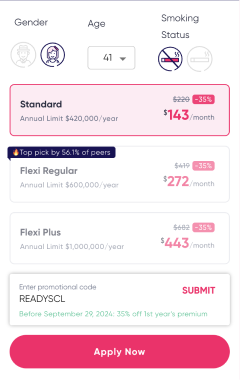
However, Bowtie wants to give customers real flexibility—sign up anytime and cancel when you’re ready. So, we use Stripe Payment to offer monthly installment options.
Karl: As I mentioned earlier, our debugging efforts go beyond just the technical side; we’re using technology to debug the entire insurance process and experience, reshaping how the public views the industry. So, every Bowtie system engineer is involved in the debugging process.
With that goal in mind, we examine every task from three different angles to make sure everything is top-notch.
When Bowtie first launched with a smaller engineering team, we even turned it into a company-wide effort by inviting all colleagues to join in ‘All-hands UAT’ to ensure smooth operations.
Karl: Rather than calling it unforgettable, I’d say it’s something we’re proud of. As a digital insurance company, Bowtie has faced numerous hacker attempts to breach our systems and access customer data. But by leveraging the AWS cloud computing platform and designing a custom system architecture, we’ve built a strong defense that blocked over 120,000 cyber attacks in just one year.
Karl: Downloading a mobile App to your home screen is indeed very convenient, but not every App works for all phones (some are only compatible with iOS or Android devices / iOS users get the best experience), and whenever an insurance company updates the program, users need to update it too. Sometimes, you even have to disable the App until the update is done. All these issues can cause inconvenience for customers.
Therefore, we decided to launch a Web App—a web-based application that runs directly on the internet without needing prior installation or regular upgrades. When designing the website and the entire system, we already considered mobile users, so the whole design, including how text is displayed, works well on different types of phones. If users want to handle claims or apply for other products more easily, they can simply add the webpage to their home screen, and the experience is just like using a dedicated App.
Bowtie aims to use innovative technology to lead the entire insurance industry forward, rather than just showing off tech for the sake of it. After weighing the pros and cons of having an App versus not having one, we chose to invest more time in perfecting our system and developing new initiatives to drive real progress in the industry.

© 2026 Bowtie Life Insurance Company Limited. All rights reserved.