Author
Bowtie Team
Updated on
2026-01-08
Disclaimer: This article is translated with the assistance of AI.
Japan mainly has two types of wild bears. Brown bear (also known as the Ezo brown bear) is mainly distributed in Hokkaido, with a body length of up to 2.2 to 2.3 meters and a weight of 150 to 250 kilograms. It is the largest and most aggressive bear species in Japan. Asian black bear (also known as the Japanese black bear) inhabits Honshu, Shikoku, and parts of Hokkaido, with a body length of about 1.1 to 1.5 meters and a weight of 80 to 120 kilograms. It has a distinctive white or cream-colored crescent-shaped mark on its chest, hence also called the “moon bear”.
According to official statistics from Japan, bear habitats cover about 40% of the country’s land area. The northeastern region and central mountainous areas are the primary habitats for the Asian black bear, with the northeastern region accounting for over 60% and the Kanto, Kinki, and Chugoku regions about 30%. Meanwhile, the Hokkaido brown bear’s activity range covers approximately half of Hokkaido.
Hokkaido is the region with the most frequent bear sightings this year. On October 23, a brown bear approximately 1 meter long was spotted foraging in a residential area in Sapporo’s central district, leading to the closure of nearby schools. The Shiretoko Peninsula is the area with the highest density of Hokkaido brown bears, as its pristine natural environment provides ideal habitats, making it a high-risk location. Other famous tourist spots like Furano and Mount Rausu have also been marked as high-risk areas.
Akita Prefecture has become one of the areas most severely affected by bear incidents this year. As of the end of October, there have been over 50 bear attacks in Akita Prefecture, with Governor Kenta Suzuki describing the situation as “beyond the local government’s capacity to handle.” Bear sightings are no longer limited to mountainous areas but are frequently occurring in urban zones, residential districts, schools, and parks, with even four attacks reported within a 3-hour period in densely populated areas.
In Iwate Prefecture, 30 incidents have occurred from April 1 to October 19, resulting in 31 people being injured. In the Sendai city area, black bears have been sighted near JR Sendai Station.
Central mountainous areas such as Kamikochi, Tateyama Kurobe, and the western foothills of Mount Fuji are major activity zones for the Asian black bear. A bear was once photographed swimming in a pond near Tateyama Kurobe’s Murodo area, and Tateyama City has issued bear sighting warnings.
The UNESCO World Heritage site “Kumano Kodo” in Tanabe City, Wakayama Prefecture, is an active area for black bears, where visitors must traverse dense forests. In the Kyoto area, popular tourist spots like Arashiyama Bamboo Grove and Ukyo Ward’s residential districts have recorded bear sightings for the first time this year.
Bear sightings have spread almost nationwide in Japan. According to a map compiled by Asahi TV, reports of bear sightings have been recorded everywhere except Kyushu and Okinawa, indicating a significant expansion of bear activity ranges. Even in the Kanto region, such as Okutama Town and Hachioji City in Tokyo, there have been 211 sighting reports this year.
This year, bear sightings have increased significantly due to several reasons. Food shortage is the main factor, as acorns (a primary autumn food for bears) have failed this year, leading bears to expand their activity range in search of food. Autumn is the season when bears hunt extensively to prepare for hibernation, so if food on the mountains is insufficient, bears are more likely to descend to human settlements for food.
Climate change has affected the bears’ hibernation period and the growth cycle of their food sources. Habitat reduction is also a key factor, as agricultural and forestry activities decrease, making the boundaries between human and bear activity areas increasingly blurred. The decline of “satoyama” (the buffer zone between nature and urban areas) has accelerated human-bear conflicts.
If you encounter a bear in the wild, take different measures based on the distance. Distance over 20 meters : Slowly and quietly leave, backing away while keeping an eye on the bear, and do not turn and run. Distance within 20 meters : Slowly back away and expand your clothes to appear larger. Distance within 5 meters : Stay calm, lie on the ground in a fetal position, protect your neck with your hands, and use bear spray if necessary.
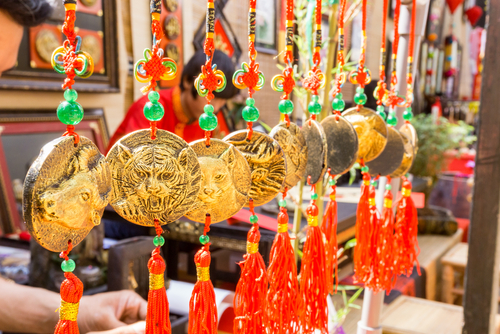
Travelers planning to visit Japan’s mountainous or remote areas should be fully prepared. Check official bear sighting maps and carry bear bells , whistles , or bear spray . Avoid traveling during dawn and dusk when bears are active, travel in groups rather than alone, and properly handle food by avoiding bringing strongly scented items to the mountains.
Insured persons should contact the EAHK global emergency support hotline at +852 2863 5767 as soon as possible after an incident occurs and provide information for assistance. Insured persons can also have family or friends act as their representatives to contact EAHK. If the insured person is unable to contact EAHK before hospitalization or treatment, they or their representatives must contact EAHK within 3 days of the emergency , otherwise assistance may not be available.
Required information:

© 2026 Bowtie Life Insurance Company Limited. All rights reserved.