Author
Bowtie Team
Updated on
2025-12-29
Disclaimer: This article is translated with the assistance of AI.
According to Hospital Authority’s statistics , from 2011 to 2020, in the 20-44 age group , nearly 27,000 people have experienced cancer diagnoses, making up almost 10% of the total cases. This highlights that during your prime years, the risk of developing cancer isn’t rare and is even on the rise.
Personally, the real-life stories I’ve heard are even more alarming. I know of four friends who were diagnosed with cancer between 25 and 35 years old , and sadly, they passed away young. What’s even more frightening is that only one of them smoked; the other three had lifestyles no different from the average person—in fact, they were healthier than I am.
Later, I learned that besides smoking, many other factors can lead to young people developing cancer or other critical illnesses, including genetic factors, unhealthy eating habits (like eating too much meat and not enough veggies, irregular meals, or overeating), late nights, lack of sleep, and high-stress jobs or lifestyles. In a fast-paced city like Hong Kong, young professionals often push themselves hard to climb the career ladder, making these unhealthy factors all too common.
Over time, even if you don’t get something as severe as cancer, you’re likely to build up the “three highs” three highs , which means high blood pressure, high blood sugar, and high blood lipids . If left unchecked, this could escalate to cardiovascular problems or even diabetes , seriously impacting your health and daily life.
Ultimately, whether it’s cancer or the “three highs,” once you’re diagnosed, you might face lifelong uninsurability . Considering how these conditions are becoming more common in younger people, it’s smart to add relevant protection while you’re still healthy—think of it as the first step in smart financial planning!
While the odds of getting a critical illness are lower for young people compared to older ones, the impact can be devastating if it happens. Due to limited income and experience, many young patients don’t have enough coverage to handle the costs and consequences of serious diseases. Adding to the burden, those in their 20s often lack the savings or assets to cover something like cancer treatment, which could lead to a financial domino effect during recovery—relying on family support just to get through it.
I still remember one of my late friends, a young father who had no insurance. After his colon cancer diagnosis, he had to turn to newspaper appeals and alumni donations to cover the steep targeted drug costs . Looking back, it was his only option, as treating cancer can cost over a million HK dollars —something that’s tough for a young person earning 20,000 to 30,000 HK dollars a month to save up for beforehand.
Even if young people have a low income, they can still purchase suitable insurance with a limited budget to handle basic risk management. VHIS is the most appropriate product, as it not only provides coverage for general surgeries but also includes the non-surgical cancer treatments specified in the VHIS plan, such as VHIS , radiation therapy , chemotherapy , targeted therapy , immunotherapy and hormone therapy, all within the coverage scope. If your company offers group medical insurance, you could opt for a high-end plan with a deductible to minimize overlapping coverage.
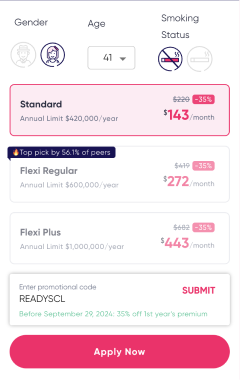
For example, with the most basic Bowtie VHIS Standard , you get strong value for 5 years at under HK$7,700 total :
| Bowtie VHIS Standard Monthly Premium | Male | Female |
| 20 years old | $104 | $122 |
| 21 years old | $108 | $126 |
| 22 years old | $111 | $127 |
| 23 years old | $115 | $130 |
| 24 years old | $118 | $139 |
| 5-year total sum | $6,672 | $7,700 |
For example, with full reimbursement* Bowtie Pink , the total premium for 5 years is approximately $11,000 :
| Bowtie Pink (Ward) VHIS Plan Monthly Premiums (Standard Room, HK$80,000 Deductible) | ||
| 20 years old | $174 | |
| 21 years old | $177 | |
| 22 years old | $180 | |
| 23 years old | $184 | |
| 24 years old | $189 | |
| Total for 5 years | $10,848 | |
=> Learn about the detailed coverage items and policy content
If you’ve already started a family or are dealing with mortgage debts, no-savings critical illness and life insurance can provide affordable premiums to ensure that if you face a critical illness or pass away prematurely, your family gets financial support. This includes compensation for medical expenses to cover living costs during treatment, while also helping maintain your family’s lifestyle.
| $1,000,000 Coverage Monthly Premium (HK$) | Bowtie Term Life Insurance | Bowtie Term Critical Illness Insurance (Multiple Cover) |
| 20 years old | $46 | $71 |
| 21 years old | $49 | $74 |
| 22 years old | $50 | $77 |
| 23 years old | $49 | $81 |
| 24 years old | $48 | $85 |
| Total for 5 years | $2,904 | $4,268 |
| $1,000,000 Coverage Monthly Premium (HK$) | Bowtie Term Life Insurance | Bowtie Term Critical Illness Insurance (Multiple Cover) |
| 20 years old | $25 | $80 |
| 21 years old | $25 | $83 |
| 22 years old | $26 | $86 |
| 23 years old | $26 | $92 |
| 24 years old | $27 | $98 |
| Total for 5 years | $1,548 | $5,268 |
For young folks with modest incomes and plenty of life twists and turns, long-term savings insurance might not offer the flexibility needed to adapt to changing financial goals.
As for what makes a suitable financial tool to align with your life plans, everyone’s risk tolerance and goals differ, so you might need a mix of stocks, bonds, and fixed deposits in your asset allocation to craft a truly personalized strategy.
Savings insurance typically has a guaranteed break-even period of up to 10 years or even longer, so young people shouldn’t rely on it as their main financial tool before settling down and starting a family.

© 2026 Bowtie Life Insurance Company Limited. All rights reserved.