Author
Bowtie Team
Updated on
2025-07-09
Disclaimer: This article is translated with the assistance of AI.
You’ve probably heard of Top Up medical insurance, which means adding an extra layer of coverage to your existing medical plan to boost protection. This helps avoid dipping into your own pocket to cover hefty medical bills if compensation falls short.
Top Up Critical Illness Insurance works the same way. It involves purchasing an additional critical illness policy on top of your current one to make up for any shortfall in coverage from your existing plan.
Many of us have critical illness policies, but some might have been bought years ago—perhaps when you first started working. The question is, does the coverage amount from back then still hold up today? Worse still, after buying your initial policy, you might have been nudged to “top up” to address potential gaps in coverage.
Truth be told, beyond just the coverage amount, you should also pay attention to the payout conditions in your critical illness policy. For instance, does your old plan offer multiple payouts for critical illnesses? Does it cover early-stage conditions like carcinoma in situ or procedures like angioplasty?
Take a good look at your existing policy. If the coverage feels lacking or just barely enough, it’s wise to consider a Top Up to increase your critical illness protection. Many opt for term critical illness plans (pure protection without savings components) as a cost-effective Top Up choice. With no savings element, every cent of your premium goes straight to coverage—maximum bang for your buck!
Before deciding to add a Top Up policy, take a moment to think about these key points:
Imagine this: if you’re unfortunately diagnosed with a critical illness, how long could your current policy’s payout support you while you’re off work recovering? Would it cover a recovery period of 2 years or more?
Aside from critical illness payouts, how much do you have in liquid assets (like cash or stocks) and passive income (such as rent or dividends) to support you during illness? If these are limited, you’ll need a more substantial critical illness coverage amount.
Do you have medical insurance? Does your company provide any? If you don’t have medical coverage or if it’s insufficient, medical expenses during a critical illness might eat into your critical illness payout. In that case, you may need a higher critical illness sum insured.
We all hope for the highest possible payout if diagnosed with a critical illness—more funds to cover treatment, recovery, and even medical bills. But insurance isn’t a one-off purchase; it’s a long-term commitment. Premiums need to be affordable, and you should also factor in potential increases due to inflation.
More insurance isn’t always better—having the right level of protection for your needs is what counts. If your current critical illness plan already meets your requirements in terms of coverage amount and scope, skipping a Top Up might be fine. However, if the sum insured is too low, lacks multiple payouts, or doesn’t cover early-stage illnesses, it’s time to consider a Top Up.
Inflation is a beast, and medical inflation is even scarier. According to risk management consultant WTW’s “2025 Global Medical Trends Survey Report,” Hong Kong’s medical inflation rate is projected to peak at 9.8% in 2025. This means the cost of the same treatment could jump by tens of percent over a decade. Whether your existing critical illness policy is meant to offset medical costs or support living expenses during recovery, you should reassess if the coverage still holds up after years of inflation.
Generally speaking, we recommend setting your coverage at 2 to 3 times your annual income.
This is because critical illness treatment and recovery typically take 2 to 3 years. Such coverage can help manage living expenses during periods of illness, recovery, and time off work. Of course, the final critical illness coverage can be adjusted based on your personal needs. Click here to learn more about setting critical illness coverage.
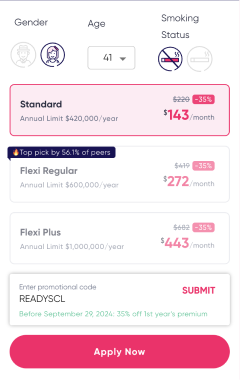
If you’ve decided to top up your critical illness insurance, choosing a term critical illness plan with no savings component, high cost-effectiveness, and no bundling is the way to go. Bowtie Term CI offers “Multiple Cover” and “Early Stage and Multiple Cover” to meet your unique needs.
The newly launched Bowtie “Term CI Early Stage and Multiple Cover” comes with the following features:

© 2026 Bowtie Life Insurance Company Limited. All rights reserved.