Author
Bowtie Team
Updated on
2025-08-06
Disclaimer: This article is translated with the assistance of AI.
Our knees bear most of our body weight, and the cruciate ligaments are located right in the knee area , forming two crossed ligaments inside the knee joint. They help maintain knee stability and allow flexible movement, enabling us to stand, walk, run, and jump freely. The cruciate ligaments are divided into anterior and posterior ones, with functions as follows:
It connects the femur to the tibia, limiting forward movement of the tibia. It also restricts knee inversion and eversion, as well as internal rotation of the tibia. It’s especially crucial during intense activities like jumping, sudden stops, and pivoting.
Located at the back of the knee joint, it functions oppositely to the ACL by limiting backward movement of the tibia, maintaining joint stability in reverse motions. It’s stronger than the ACL, so injuries are relatively less common.
The causes of injuries to the anterior and posterior cruciate ligaments differ.
Anterior cruciate ligament injuries mostly occur during sports , where even a simple jump or twist can exceed the ligament’s tensile strength, leading to a tear or complete rupture. Sports involving running and jumping like soccer, basketball, badminton, or even a misstep while hiking can cause ACL injuries. Common scenarios during sports include:
Posterior cruciate ligament tears are less common than ACL ones . Traffic accidents are a key cause, where a crash might violently impact the tibia, or falling and hitting the front of the knee, causing direct impact to the lower leg. This leads to excessive backward shift of the tibia, resulting in a tear or complete rupture.
If you experience the above symptoms, seek medical attention immediately. Doctors will use MRI scan to diagnose if the cruciate ligament is torn, and also check for any damage to the meniscus and ligament tissues .
Additionally, doctors will perform an X-ray to check for any fractures in the joint.
Feeling muscle soreness for 2-3 days after a marathon or long training run is totally normal. But if the muscle or joint pain lingers for a week or more, or it’s bad enough to disrupt your daily life, you might be dealing with an injury!
Sprained ankle , ACL tear , bone fracture —these are common woes for sports enthusiasts. If you’re unlucky enough to get hurt, recovery takes time, and then there are the medical bills. Even without surgery, you might need ongoing physiotherapy and clinic follow-ups—those costs add up fast!
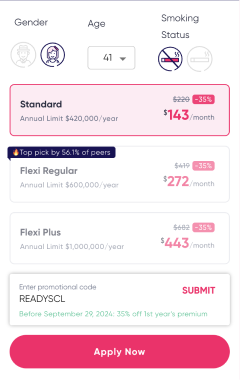
The good news? For as low as $62/month* , you can get covered by Bowtie Touch Wood Protector Accident Medical Insurance . It offers up to HK$420,000 annual coverage, including outpatient services (like wound cleaning and stitching), physiotherapy, Chinese bone-setting, chiropractic care, MRI scans, hospitalization, and surgery. Over 700 occupations are covered, including sports coaches and disciplined services.
Patients who have experienced an anterior cruciate ligament injury face a higher risk of developing knee osteoarthritis. Even after surgical repair of the ligament , they may still encounter related inflammation risks.
The risk of arthritis is influenced by factors like the severity of the ligament injury, any joint damage, and post-treatment activity levels.
Before any exercise, always do a proper warm-up to stretch and relax your limbs, and avoid overly intense moves that push beyond your limits.

© 2026 Bowtie Life Insurance Company Limited. All rights reserved.