Author
Bowtie Team
Updated on
2025-08-12
Disclaimer: This article is translated with the assistance of AI.
Allergies are a chronic condition where your body’s immune system mistakenly kicks into defense mode against harmless substances, releasing inflammatory agents that trigger reactions like rashes, runny nose, itchy skin, or vomiting. In severe cases, it can cause breathing difficulties or a drop in blood pressure—potentially life-threatening. These reactions are recurrent; eat the same trigger food, and bam, same symptoms every time. Common allergens fall into two main categories: food and environmental.
|
Allergens |
Examples |
|
Food Allergens |
Such as dairy, eggs, wheat, soy, nuts and peanuts, fish, shellfish and crustaceans, etc. |
|
Environmental Allergens |
Such as animal dander, fruits, dust mites, insects, pollen, latex, etc. |
Common allergic reactions include:
| Allergy Type |
Symptoms |
|
Food Allergy |
Reactions triggered by eating certain foods, including rashes, abdominal pain, vomiting, wheezing, etc. |
| A type of allergic dermatitis that usually causes itchy skin, blisters, etc. | |
| A form of allergic rhinitis often caused by environmental allergens, leading to sneezing, runny nose or eyes, etc. | |
| Also known as ” hives ,” usually triggered by environmental allergens, causing redness, swelling, rashes, etc. | |
| Exposure to airway-irritating allergens tightens the airways, causing breathing difficulties. | |
|
Drug Allergy |
Reactions after taking certain medications; severe cases can lead to swollen lymph nodes, nephritis, or even anaphylactic shock. |
Patients can have varying degrees of allergic reactions to different allergens, and doctors use allergy tests to identify the triggers. Common allergy tests include:
Various private hospitals, clinics, or testing centers offer different allergy tests, with prices as follows:
| Private Hospital | Price (HK$) |
| Hong Kong Sanatorium & Hospital * | Skin Prick Test: $920
Drug Skin Test: $2,750 |
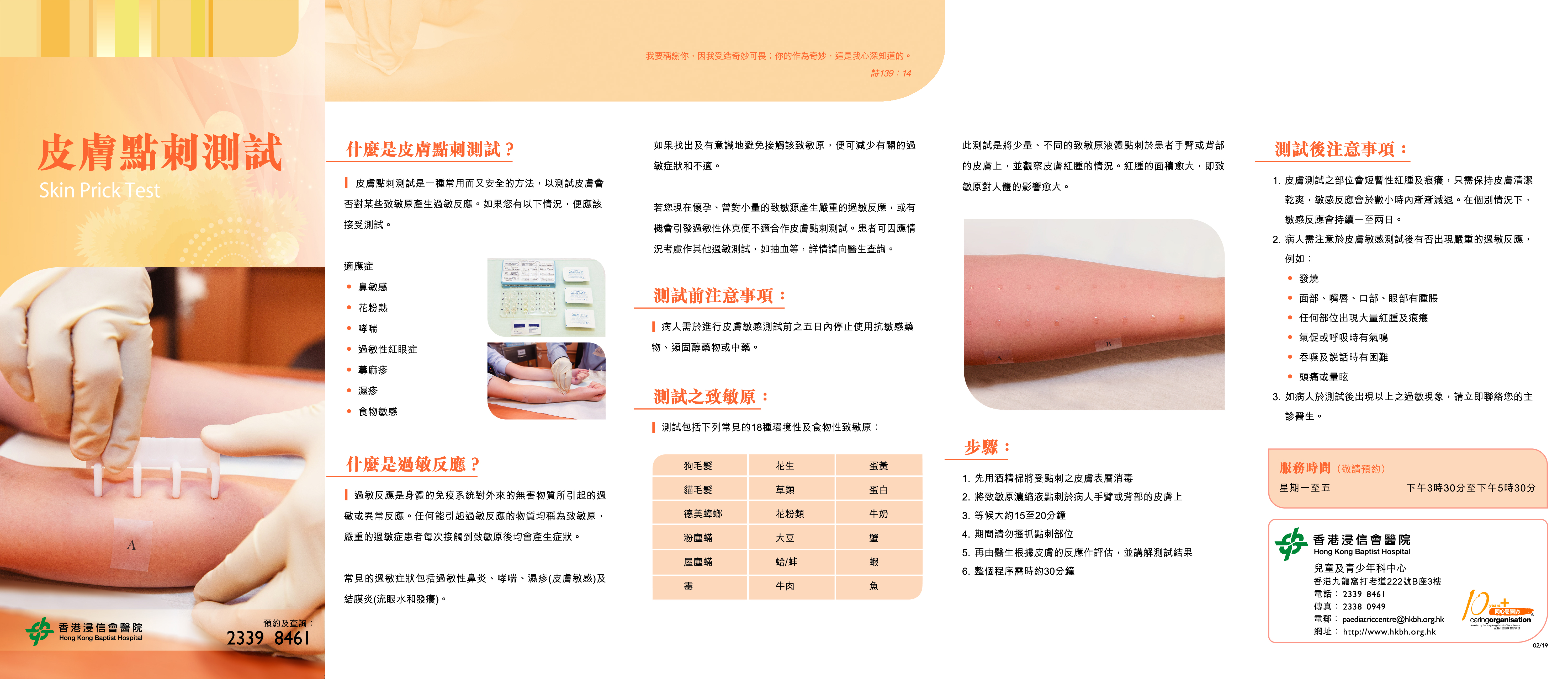
| Hong Kong Baptist Hospital # | Skin Prick Test: $2,600 (18 food and environmental allergens) |
| St. Teresa’s Hospital (French Hospital) * | Pediatric Allergen Panel: $1,155 – 1,795
(IgE Test + 9 food and environmental allergens) |
| Union Hospital * | Mycobacterium Tuberculosis Culture and Drug Sensitivity Test: $840
Bacterial Culture and Drug Sensitivity Test: $660 – 913 |
| Clinic / Testing Center | Price (HK$) |
| Bowtie & JP Health Centre |
|
| Allergy and Asthma Centre # | Skin Prick Test: HK$110 / 1 allergen
Blood Test: HK$4,800 (244 food and environmental allergens) |
| Virtus Medical * | Drug Allergy Assessment and Test: $5,000 + Doctor’s Fee ($1,800 – 2,000)
Infant Food Allergy Prevention Program: $5,000 |
| Quality HealthCare Medical Services * | South China Allergen Check: $3,600 (40+ food and environmental allergens) |
| Kinetics Medical & Health Group * | Allergy Test Package: HK$7,000 (172 food and environmental allergens) |
| Hong Kong Allergy Test Centre # | Faber Allergy Test: HK$5,700 (150 types)
Skin Patch Test: HK$3,500 (30 types) / HK$5,000 (60 types) |
| Primecare Paediatric Wellness Centre # | Faber Allergy Test: HK$8,000 |
| HK BioTek | IgE Food Sensitivity Test: HK$3,200
IgE Food and Environmental Sensitivity Test: HK$6,400 |
Besides visiting a medical center or clinic to schedule a test, you can also buy at-home DNA test kits online and perform the check yourself right at home!
Take CircleDNA’s genetic test as an example – just follow these 4 simple steps to gain better insights into your health.
CircleDNA offers 4 genetic test options, with reports covering diet sensitivity, exercise recommendations, ancestry composition, genetic disease risks, and more. Prices range from HK$1,490 to HK$4,990.
Think of each gene like a book – CircleDNA uses Whole Exome Sequencing (WES) technology to give you the full story, which is way more comprehensive than the few pages you get from traditional ” genotyping ” methods.
All samples are processed in CircleDNA’s internationally accredited lab, using the world-leading NovaSeq™ 6000 DNA sequencing system from Illumina. Their WES technology scans all protein-coding genes thoroughly, analyzing variations that matter for your health – delivering more comprehensive and accurate results.
Food sensitivities come in acute and chronic forms, with severity influenced by factors like portion size, eating speed, and cooking methods:
1. Acute Sensitivity
Reactions can appear within minutes of eating, with mild symptoms like runny nose, itching, rashes, vomiting, or diarrhea. Severe cases may involve tongue or throat swelling, sudden blood pressure drop, pale skin, airway constriction, breathing difficulties, rapid heartbeat – potentially leading to anaphylactic shock or even death.
2. Chronic Sensitivity
Symptoms might show up hours to days after eating, including ongoing fatigue, migraines, or gut discomfort. In serious cases, it could trigger asthma or eczema.
Chronic sensitivities are trickier to pinpoint, so try keeping a detailed food diary of your eating habits and reactions – it can help your doctor trace the triggers.
Doctors will provide appropriate treatment based on the severity of the allergic reaction, including:
In case of an emergency allergic reaction, an “epinephrine auto-injector” can be used to alleviate symptoms. It’s a simple epinephrine injector— just inject into the thigh.
If the patient experiences a mild to moderate allergic reaction , first remove them from the allergen, stay with them and notify emergency contacts, and administer prescribed medications. If needed, use the epinephrine auto-injector to ease symptoms.
If the patient has a severe allergic reaction , have them lie down or sit, immediately use the epinephrine auto-injector, and call an ambulance for hospital treatment. If no improvement after 5 minutes, administer a second dose.


© 2026 Bowtie Life Insurance Company Limited. All rights reserved.