Treatment Plan
Treatment Plan

Does General Anesthesia Cause Memory Loss? Types, Side Effects, Risks & Process

Author Bowtie Team
Updated on 2025-08-01


Disclaimer: This article is translated with the assistance of AI.

Undergoing surgery or medical procedures often requires anesthesia to numb pain and induce temporary unconsciousness. Curious about the different types? What about the potential risks and side effects? The Bowtie team has gathered all the key info to help you understand the anesthesia process, associated risks, and essential tips—empowering you to make informed health decisions!
~Exclusive Blog Offer~
Sales Up To 65% first year's premium!
Save up on your first year's premium now until Dec 11! (Enjoy extra coverage with our wellness package for just HK$100/month in the first year!)

Why Is Anesthesia Necessary?

To ensure certain medical procedures go smoothly, patients need anesthesia to achieve the following states:

  • Loss of consciousness and memory during the procedure
  • Temporary loss of sensation and pain
  • Ensuring the patient remains still during surgery to maintain accuracy and safety
  • Reducing sympathetic or parasympathetic reflexes to stabilize blood pressure and ease heart load

Who Administers Anesthesia?

It depends on the patient’s condition and the surgery’s needs. Generally, major surgeries require an anesthesiologist on site, while simple ones can be handled by the surgeon. The anesthesiologist monitors the patient’s vital signs, adjusts anesthesia doses if needed, or handles emergencies, allowing the surgeon to focus on the operation.

For local anesthesia, it also depends on the patient’s situation, surgery complexity, and duration to decide if an anesthesiologist is required. Sometimes, they target specific nerves for precise drug distribution and to minimize damage to blood vessels and vital organs during injection.

Different Types of Anesthesia

Anesthesia methods are mainly divided into the following 4 types:

General Anesthesia Local Anesthesia Regional Anesthesia Monitored Anesthesia
Anesthesia Method Inhaled gases and injected drugs Topical or injected drugs Injected into the spinal canal or epidural space Sedatives used under anesthesiologist monitoring
Anesthesia Site Whole body Surgical area Lower body Local
Level of Consciousness Completely unconscious Awake Awake, but sedatives are often used to induce sleep Unconscious
Applicable Conditions Surgeries above the abdomen Minor surgical procedures Surgeries below the abdomen, commonly used for C-sections Non-invasive procedures or examinations
Recovery Time (When Effects Wear Off) Regain consciousness once administration stops post-surgery 1 to 2 hours or more 2 to 3 hours Quickly regain consciousness after stopping the drug
Advantages Reduces pain and traumatic memories for the patient Lower chance of complications Avoids side effects of general anesthesia, reduces leg blood clots Lower risk
Disadvantages Higher chance of side effects, longer recovery time Possible adverse reactions Possible adverse reactions Possible adverse reactions

Understanding Anesthesia Process

Doctors administer anesthesia through intravenous injection or inhaled gas. After anesthesia, they monitor the patient’s vital signs and consciousness level using equipment to ensure safety during anesthesia and surgery.

During general anesthesia, patients temporarily lose all sensation. An anesthesiologist carefully monitors the patient’s condition, controls the dosage of anesthetics, and provides fluids or blood transfusions as needed. Once the surgery is complete, the anesthesiologist reverses the anesthesia, allowing the patient to recover in the recovery room until the effects wear off and they naturally regain consciousness.

With local anesthesia, patients remain awake but feel no pain. In regional or monitored anesthesia, sedatives are used, so patients have no awareness.

Anesthesia Side Effects and Risks

Modern anesthesia is very safe, with an extremely low risk of direct death. According to data from the Hospital Authority between 2003 and 2005, the probability of anesthesia-related death is 0.000061% . Possible side effects or complications from anesthesia include:

Common Side Effects Uncommon Side Effects/Complications Rare Complications
  • Nausea and vomiting
  • Sore throat
  • Dizziness or blurred vision
  • Headache
  • Itching
  • Fatigue or drowsiness
  • Muscle aches and back pain
  • Pain during drug injection
  • Temporary confusion or memory loss
  • Aspiration into lungs causing blockage
  • Breathing difficulties
  • Failed intubation
  • Dental damage
  • Eye damage
  • Severe allergic reaction to drugs
  • Nerve damage
  • Stroke
  • Heart attack
  • Complications from invasive intubation
  • Awareness during surgery
  • Death

Serious complications are uncommon and more likely in elderly patients with pre-existing conditions, previous strokes, or heart attacks. Additionally, immobility during surgery can increase pressure on certain areas, potentially leading to nerve damage, paralysis, blindness, or skin ulcers.

Local anesthesia carries lower risks than general anesthesia but can still cause side effects or complications. Common ones include:

  • Temporary nerve damage, recovering in weeks to months
  • Localized paralysis, with very low chance of permanent damage
  • Hematoma or bruising, especially in patients on blood thinners
  • Local anesthesia failure, requiring more drugs or alternative methods

Other side effects are less common, such as allergic reactions to anesthetics, inflammation, damage to surrounding structures, seizures, coma, respiratory failure, irregular heartbeat, or cardiac arrest.

1. Does General Anesthesia Affect Memory?

There’s currently no evidence that general anesthesia impacts memory.

That said, if you experience blood loss, electrolyte imbalance, post-surgery inflammation, or take painkillers during the procedure, you might feel tired and mentally foggy afterward.

2. Which Medications Should I Stop Before Anesthesia?

Your anesthesiologist will assess you before surgery to ensure you’re in optimal condition for anesthesia. They may advise stopping certain medications, such as oral diabetes drugs, warfarin (blood thinners), or anti-coagulants like clopidogrel.

3. Do I Need to Fast Before Anesthesia?

To prevent food or liquids from entering your lungs during anesthesia, it’s generally recommended to avoid eating or drinking for at least 6 hours before surgery. During this fasting period, you can sip clear water up to 2 hours before the procedure. Additionally, before anesthesia, keep these in mind:

  • Quit smoking—the longer, the better
  • Stop taking any herbal medicines at least 2 weeks before surgery
  • Follow your anesthesiologist’s instructions on stopping or continuing certain medications

Bowtie Tips*

Does Bowtie VHIS Cover Anesthesia Fees?

If you’re covered under Bowtie VHIS, whether it’s for day-case or inpatient surgery, as long as it’s medically necessary, Bowtie will cover your anesthesiologist fees.

Here’s the coverage amount for different plans:

Bowtie VHIS – Standard Bowtie VHIS – Flexi Regular Bowtie VHIS – Flexi Plus
Anesthesiologist Fees 35% of Surgeon Fees ^ Complex Surgery:
HK$21,000 per procedure Major Surgery:
HK$10,500 per procedure Intermediate Surgery:
HK$5,300 per procedure Minor Surgery:
HK$2,100 per procedure
Complex Surgery:
HK$31,500 per procedure Major Surgery:
HK$15,800 per procedure Intermediate Surgery:
HK$7,900 per procedure Minor Surgery:
HK$3,200 per procedure
  • * This section is provided by Bowtie
  • ^ This percentage applies to the actual reimbursement amount for surgeon’s fees or the coverage limit for surgeon’s fees under the surgical classification, whichever is lower.

Bowtie VHIS Premiums

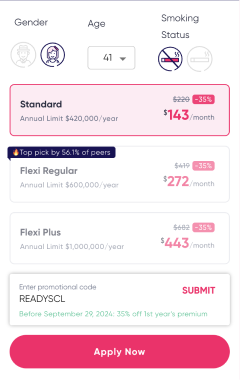
Benefit Items Bowtie VHIS Standard Bowtie VHIS Flexi Regular Bowtie VHIS Flexi Plus
Men’s Premium# HK$131 HK$236 HK$421
Women’s Premium# HK$166 HK$345 HK$548

Learn More

Learn More

Learn More

  • # The premium calculations above are based on a 30-year-old non-smoking male and female for reference
  • The premium calculations above are for reference only. The actual premium you need to pay is affected by time, inflation, underwriting and other factors, and you need to add the premium levy collected by the Insurance Authority. Please download and refer to the standard premium schedule( Bowtie VHIS Standard / Bowtie VHIS Flexi Regular / Bowtie VHIS Flexi Plus


Want more comprehensive coverage? Consider purchasing Bowtie Pink VHIS , which provides up to HK$80 million lifetime limit for the insured, full reimbursement* for medical expenses! Monthly premium as low as HK$289^.

Bowtie Pink Blog Promo!

Tired of sky-high private hospital bills but hesitant about purchasing VHIS? Bowtie Pink provides full coverage*, with long-term premiums are substantially lower than market rates^.

For a limited time, use the exclusive Bowtie Blog promo code【BLOGENGINSURE】to get an impressive 65% in first year’s premium and secure top-tier health protection at an unbeatable price!


*Full coverage shall mean no itemized benefit sub-limits, and applies to designated benefit items only. The benefit payable shall be subject to the remaining deductible (if applicable), annual benefit limit, lifetime benefit limit and other limitations such as reasonable and customary charges, a pre-existing condition, “List of Designated Hospitals in Mainland China” and receiving medical treatment in the United States. For detailed terms and conditions, product risks, and exclusions, please refer to the relevant product website and policy.
^For example, with Bowtie Pink (Ward) and the deductible option HK$80,000, the monthly premium for a 30-year-old non-smoker is HK$197. The premium comparison above is based on similar medical insurance plans with the ward level (data source on 27, July 2023), HK$50,000 to HK$80,000 deductibles, for a 30-year-old non-smoker. Different medical insurance plans have different coverage and benefit limits. For details, please refer to the relevant insurance policy and its terms and conditions.

  • * Full reimbursement means no sub-limit on compensation items and applies only to specified benefit items. Payable benefits are subject to the remaining deductible (if applicable), annual benefit limit, lifetime benefit limit and other limitations including reasonable and customary charges, pre-existing conditions, designated hospital list in Mainland China and medical treatment in the United States, etc. For detailed product terms and conditions, product risks and exclusions, please refer to the relevant product website and policy.
  • ^ Based on a 30-year-old male purchasing Bowtie Pink (Semi-Private) – HK$80,000 deductible as an example.
  • Any content in this article related to Bowtie products is for reference and educational purposes only. Customers should refer to the detailed terms and conditions on the relevant product pages.


Related Articles

Laparoscopy: Minimally Invasive Surgery and Examination Costs 2022 (with Insurance Advice) Laparoscopy: Minimally Invasive Surgery and Examination Costs 2022 (with Insurance Advice)
Treatment Plan

Laparoscopy: Minimally Invasive Surgery and Examination Costs 2022 (with Insurance Advice)

What is Ablation? Success Rates & CUHK Hospital Options What is Ablation? Success Rates & CUHK Hospital Options
Treatment Plan

What is Ablation? Success Rates & CUHK Hospital Options

Ectopic Pregnancy: Detection Timing, Early Signs, Surgery Costs Ectopic Pregnancy: Detection Timing, Early Signs, Surgery Costs
Treatment Plan

Ectopic Pregnancy: Detection Timing, Early Signs, Surgery Costs

Enter Promo Code [BLOGENGINSURE] when purchasing VHIS on or before 11 Dec to enjoy 65% off first years' premium!
Quote now

Other Topics

Email

General Enquiry
hello@bowtie.com.hk
Media Enquiry
media@bowtie.com.hk
Partnership
partner@bowtie.com.hk

© 2025 Bowtie Life Insurance Company Limited. All rights reserved.
Your Browser is outdated. To have a better user experience, please upgrade or change another browsers. OK