Author
Bowtie Team
Updated on
2025-06-19
Disclaimer: This article is translated with the assistance of AI.
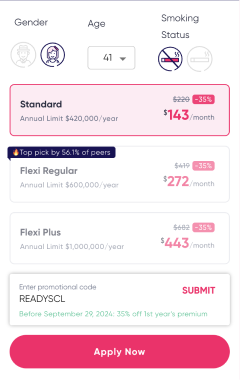
Bowtie pioneered the online underwriting system, allowing you to know anytime, anywhere, instantly whether you’re covered and the required premiums, plus a handy reference for the next 5 years of premiums!
► How to Apply for Bowtie in 10 Minutes! (No medical exam required, fully online application)
We buy insurance because we need certain protections. In the era when insurance sales were dominated by intermediary channels, products were often recommended by agents or brokers to clients.
However, times have changed, and now the internet is one of the main channels for insurance sales. Policyholders can easily access coverage details and premiums for various products online, without relying on hearsay—you can simply pick what suits you or your family.
The insurance products available in the Hong Kong market are incredibly diverse, and here are some commonly encountered ones:
| Insurance Products | Main Functions | Common Classifications |
| Medical Insurance
(Medical Insurance) |
On a reimbursement basis, it covers eligible medical expenses (such as hospitalization and surgery fees) | VHIS, Traditional Medical Insurance Plans |
| Life Insurance
(Life Insurance) |
When the insured passes away, it provides a lump-sum death benefit to the policy beneficiary equivalent to the sum assured | Term Life, Whole Life, Savings Life |
| Critical Illness Insurance
(Critical Illness Insurance) |
When the insured is diagnosed with a serious illness specified in the policy, they receive a lump-sum payment equal to the full sum assured or a percentage of it, with no restrictions on how it’s used | Term Critical Illness, Whole Critical Illness |
| Investment-Linked Assurance
(Investment-linked Assurance) |
In addition to life insurance benefits, policyholders can withdraw the policy account value, which varies with investment performance, upon surrender or maturity | Protection-Type Investment-Linked Life Insurance (PLP), Guaranteed-Type Investment-Linked Life Insurance, Light Protection-Type Investment-Linked Life Insurance |
| Annuity
(Annuity) |
Provides periodic cash payments over a specific period (or for life), ideal for retirement planning | Public Annuity, Qualified Deferred Annuity Plan (QDAP) |
| General Insurance
(General Insurance) |
Protects against various risks like property damage, personal injury, and third-party liability | Auto Insurance, Home Insurance, Travel Insurance |
After understanding the exact insurance types needed for yourself or your family, the next thing to consider is the purchase channel. Buying through an insurance intermediary allows you to get advice before purchasing, and after purchasing, you can submit claims or manage policies through them. However, there’s no free lunch; policyholders often have to pay higher premiums (which include intermediary commissions), and enjoying the above services isn’t guaranteed. It depends on your intermediary being very reliable and having long-term experience in the insurance industry. Get prepared for possible scenarios of your policy becoming orphan policy .
If you want high-value coverage, buying online products like medical insurance, life insurance, or critical illness insurance is a convenient and quick option. Online purchasing isn’t limited by location or time, no need for endless appointments, and you can take your time to understand different policies’ coverage and premiums without pressure, making sure you know all the details before buying. Plus, pure online insurance products often have lower premiums since these companies don’t have to pay intermediary commissions or related operating costs (like agent office rents and training fees). For after-sales service, most pure online insurance companies also have a Customer Service Team to help with purchasing, following up on claims, and managing policies.
Whether you choose to buy through an intermediary or directly online, I strongly recommend taking the time to compare similar insurance plans before signing. For example, if you’re looking to get VHIS , before purchasing, you can visit the official VHIS website or different insurance companies’ sites to download information on various standard and flexible plans, then compare the coverage levels and long-term premiums.
If you prefer an intermediary to handle it, you can meet with agents from several companies or find a broker who offers products from different companies. Listen to the features and pros/cons of various plans, shop around, and then make your final decision.
Many people want to pick plans with the highest coverage levels (like Bowtie Pink or ultra-high Term Life insurance) to cover all bases. However, the more comprehensive the coverage, the higher the long-term premiums will be.
Keep in mind, for medical insurance, life insurance, or critical illness coverage, people generally need protection for decades. If you can’t afford the premiums and have to stop paying, the policy lapses, and your coverage vanishes. Even if your finances improve later and you try to reapply, it might be tougher because health tends to decline with age. If you’ve had health issues (like high blood pressure), insurers might reject you, or if approved, charge extra premiums ( Loading ) and/or add exclusions.
So, buying insurance isn’t about getting the highest coverage possible—it’s about choosing what fits your budget for long-term sustainability. That’s the smart way to go.
In addition to coverage content and premium levels, policy terms such as waiting periods, cooling-off periods, and exclusions are also worth noting for policyholders, as they can affect the rights of the insured and the policyholder, and even influence future claim outcomes. For example, with VHIS, the relevant policy terms are as follows:
| Waiting Period | Except for “Pre-existing conditions unknown at the time of application” , no waiting period is set |
| Cooling-off Period | 21 days |
| Exclusions | For example, “any treatment/drugs/tests or services that are not medically necessary”, “due to reliance on or overuse of drugs/alcohol/drugs, self-inflicted injury/suicide, participation in illegal activities, or sexually transmitted diseases and their complications”, “preventive treatments/care, such as physical examinations”, and “congenital diseases diagnosed or occurring before age 8” (full exclusions details ) |
When applying, insurance companies generally require applicants to declare their health status, smoking and drinking habits, and past medical history to conduct the underwriting process. If an applicant’s health is poor or they have had certain diseases, the insurance company has the right to reject the application or approve it with conditions, such as the aforementioned “Loading” and/or additional exclusions.
Some people might think that deliberately omitting or concealing certain information or medical history could help get the policy approved smoothly, but this idea is quite risky. If an applicant misrepresents or fails to disclose their health status or medical history, the insurance company may later refuse to pay claims on the grounds of non-disclosure of “material facts,” or even unilaterally cancel the policy. Therefore, we must adhere to the principle of “utmost good faith” when applying, proactively declaring all important information that could be relevant to the insurance company for the underwriting process.

© 2026 Bowtie Life Insurance Company Limited. All rights reserved.