Author
Bowtie Team
Updated on
2025-12-29
Disclaimer: This article is translated with the assistance of AI.
Should poor people or fresh graduates just entering the workforce buy insurance? Netizens have different opinions.
A LINKG forum user suggests that some say the poor should definitely buy insurance, as a small premium can provide substantial protection; however, others argue to focus on increasing income first and worry about insurance later. Another user shares that his mother bought him savings plans and Term CI policies early on, requiring him to pay nearly HK$10,000 annually after graduation. He chose to stop paying, using the money for travel instead, feeling it’s better to potentially regret that than to keep supporting insurance agents.
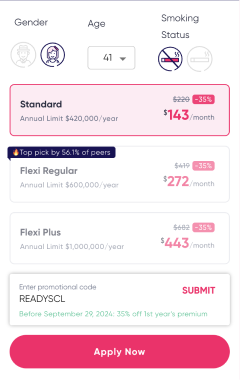
To answer the above question, it really depends on what type of insurance we’re talking about. If it’s medical insurance, almost everyone needs it, and the poor should prioritize it. For example, with VHIS, the standard plan for adults can cost as little as a few hundred dollars per month (just the price of two dinners), yet it provides up to HK$420,000 in annual medical coverage, offering a basic safety net. Keep in mind, a sudden illness or injury treated in the private healthcare system can easily cost tens of thousands of dollars, and in severe cases, hundreds of thousands—enough to wipe out a low-income family’s savings or derail their financial plans. Some might suggest using public hospitals, but as we all know, the Hong Kong Public Medical System is overloaded, with long waits for specialist appointments that could delay treatment. So, opting for private care is often the smarter choice.
As for Term CI and Bowtie Term Life, which mainly cover income loss, whether to buy them depends on your personal financial needs. If your budget is tight but you want decent coverage, term policies without savings components (pure protection types) might be ideal. These often have lower premiums for the same coverage level compared to plans with savings elements.
Remember, buying insurance is like investing—do it within your means. Whether you go for term (protection-only) or whole life (with savings), don’t use most of your income for premiums. Allocating 10% to 20% is more than enough to keep things balanced.
A user wonders why anyone bothers buying insurance, claiming it’s just funding insurance intermediaries and that you end up “paying without getting paid out.” Well, that’s a bit harsh—going through an intermediary isn’t always a waste. A good broker or agent can offer expert advice on protection and finances, manage your policy, and help with claims. Of course, every industry has its bad apples, and it’s no secret that some policies become Orphan Plan , left unmanaged with agents disappearing after the sale.
Nowadays, you have more options for buying insurance. If you prefer to research and manage things yourself, online insurance is a great pick. Take Bowtie, for instance—we offer various VHIS plans, Bowtie Term Life, Term CI, accident medical coverage, and cancer protection products. From application to approval, it can all wrap up in as little as 10 minutes. And if questions pop up, no need to stress; you can reach our customer service or claims team via WhatsApp, phone, email, or even schedule a meeting to handle everything from signup to payouts.
As for the worry of “buying without getting paid,” it boils down to understanding your policy, picking the right product, being honest during application, and ensuring claims match the terms. Insurance companies can’t deny valid claims. At Bowtie, for example, we’ve handled over 70,000 claims since we started, with a success approval rate of 99.53%*.
A user shared his successful claim story with medical insurance. He used to think insurance was a scam, but after a colleague’s nudge, he signed up for a basic plan. Little did he know, he ended up in the hospital for surgery due to an illness, and that policy stepped in to cover his bills, saving him thousands in hospital costs. Now, he’s advising everyone over 30 to seriously consider getting medical insurance.
He’s absolutely right. It’s not just for folks over 30—everyone from newborns to those in their golden years should grab medical insurance if they can, since health issues and accidents can strike out of nowhere. The sooner you sign up, the quicker you’re protected. On the flip side, waiting until later in life might complicate things due to existing health records , which could mean insurers slap on extra premiums, add more exclusions, or even turn you down flat.
These days, insurance options are more varied than ever—think online plans without hefty agent fees, letting companies keep costs down and premiums more affordable. Plus, with the regulated Voluntary Health Insurance Scheme launching in 2019, medical insurance has become surprisingly budget-friendly.
Save up to 48% of the premium with the same level of protection^, the Bowtie VHIS Standard , for example. For as little as a hundred-plus bucks a month, you get solid basic coverage:
| Age | Male (Non-Smoker) Premium ($) | Female (Non-Smoker) Premium ($) |
| 0 | 146 | 155 |
| 10 | 96 | 95 |
| 20 | 104 | 122 |
| 30 | 138 | 175 |
| 40 | 192 | 235 |
| 50 | 301 | 351 |
| 60 | 464 | 446 |
| 70 | 782 | 731 |
| 80 | 1,066 | 997 |
Some wonder if it’s impractical to get insurance at 50.
To answer this question, starting insurance at any age isn’t impractical. As mentioned earlier, illnesses and accidents are unpredictable, and we’ve discussed the limitations of the public healthcare system. Health insurance can provide an extra option, allowing the insured to quickly access private hospitals or clinics, with medical costs claimable from the insurer on a reimbursement basis. If one has been in good health and can still qualify, getting VHIS at 50 is worthwhile. Even the basic VHIS Standard plan is better than having no coverage at all.
A user already has basic company medical benefits and wants to add personal insurance as a top-up. She’s smart to know that company coverage alone isn’t rock-solid and needs enhancement. No matter how strong your company plan is, it vanishes when you switch jobs or retire, creating a coverage gap. Some might think it’s fine to buy later, but in reality, future applications could be tougher due to health changes or medical history. So, boosting coverage early is the smart move.
If you already have company insurance or basic personal coverage, consider upgrading with a premium VHIS plan that offers full reimbursement and deductible options. For example, with Bowtie Pink (Ward) , the plan provides annual/lifetime limits of HK$8,000,000 and HK$40,000,000. With a deductible set at HK$20,000, a 35-year-old non-smoker would pay around HK$357 per month, which is a reasonable amount for most working folks.
A user has company insurance and is buying for the first time, wanting VHIS and critical illness coverage—what should he keep in mind? If he already has company medical insurance, he could also consider something like Bowtie Pink for VHIS. Its deductible feature lets you maximize company benefits while avoiding overlap between policies.
As for critical illness insurance, he should pay attention to a few key points:
Cancer, stroke, and heart disease are known as the three major critical illnesses, so make sure the policy covers these common severe conditions. If it only covers cancer or one or two of them, the protection might fall short.
Check if the policy covers situations like carcinoma in situ or procedures such as angioplasty for “early-stage critical illnesses”; even if it does, dig into the specific definitions for each.
Things like cancer recurrence or a second critical illness diagnosis aren’t rare, so verify if the policy pays out for subsequent diagnoses, and note the limits on claims and payouts.
Recently, we launched the Bowtie Term CI Early Stage and Multiple Cover to tackle those issues head-on—it’s a comprehensive term critical illness insurance product designed for full protection. Assuming Buddy is 30 years old (non-smoker), insuring $1,000,000 in coverage through this plan would only cost $132 per month, so it’s definitely worth checking out.
A user asked how much others spend on insurance annually and shared that his own premiums total around $10,000 a year. The truth is, everyone has different protection needs, and factors like the type of policy (medical, critical illness, life insurance, etc.—whether savings or non-savings), coverage amount, and payment period (for savings policies) vary widely, so comparing straight dollar figures isn’t all that meaningful.
As mentioned earlier, no matter what policy you’re buying, always make sure it fits your budget. If premiums are already eating up more than half or an even higher chunk of your or your family’s income, it’s wise to reassess your protection needs to keep things in balance.
If you’re working with a limited budget or hunting for great value protection, Bowtie’s lineup of insurance products is absolutely worth a closer look.
For instance, let’s say a 30-year-old LIHKG user with a monthly income of $30,000 is insuring with Bowtie’s medical, life, and critical illness policies—here’s a breakdown of the annual premiums:
| Bowtie Insurance Product | Annual Premium (30 years old, male, non-smoker) |
| Bowtie Pink (Ward) ($20,000 deductible) | $3,648 |
| Bowtie Term Life (Coverage: $3,000,000) | $1,356 |
| Bowtie Term CI Early Stage and Multiple Cover (Coverage: $1,500,000) | $2,376 |

© 2026 Bowtie Life Insurance Company Limited. All rights reserved.