How to Surrender Critical Illness Insurance?
Learn how to surrender critical illness insurance easily. Discover steps, costs, and what to know before canceling your policy with Bowtie Hong Kong.
What Are the Consequences of Surrendering Critical Illness Insurance?
Critical illness insurance can generally be divided into savings-type critical illness and term critical illness insurance (also known as pure critical illness ), due to the differences in their product structures, the consequences faced by the policyholder when deciding to surrender the policy are also different.
Situation 1: Surrendering Savings-Type Critical Illness Insurance
Savings-type critical illness insurance includes two main components: “protection” and “savings.” The premiums paid are used not only to purchase protection but also to accumulate savings that earn interest, providing the policyholder with stable returns.
Generally, the contribution period for savings-type insurance ranges from 20 to 25 years, and the expected breakeven year can extend up to 20 to 50 years. In other words, if you surrender early, the cash value you can withdraw may be lower than the premiums already paid, resulting in financial loss while also losing the critical illness protection, making it impossible to “break even.”
Situation 2: Surrendering Pure Critical Illness Insurance
Unlike savings-type critical illness insurance, pure critical illness insurance does not have a cash value and focuses solely on providing protection. This means policyholders are not bound by any “return” factors and can flexibly choose whether to surrender based on different ages and life stages without worrying about losses.
How to Apply for Critical Illness Insurance Surrender?
Regardless of whether you have savings critical illness or pure critical illness insurance, you must submit an application to the insurance company in advance before surrendering.
Under normal circumstances, the policy terms will specify how many days in advance the customer needs to submit the critical illness insurance surrender application. The policyholder must contact the insurance intermediary or insurance company within the specified period, submit the surrender application form as required, and sign other relevant documents for review. Some insurance companies may have more complex surrender procedures, depending on their practices.
If you are a Bowtie customer, you only need to notify at least 30 working days in advance to surrender, with no handling fees required, and the critical illness coverage will remain in effect until the next plan anniversary date after the notification period.
4 Key Things to Know Before Surrendering Critical Illness Insurance
If you are still pondering whether you should surrender, you may want to refer to the following suggestions first and avoid making a hasty decision:
1. Pay Attention to Surrender Terms
As the saying goes, “the devil is in the details,” every insurance policy is different, so if you decide to surrender, you should carefully review the terms and conditions of that critical illness policy.
For example, although most plans have a 30-day notice period, some policies may have a longer notice period. Policyholders should understand the method of canceling the policy in advance and allow sufficient time for the process.
2. Consider if Surrender is the Only Option
Before deciding to surrender, take a moment to think carefully about whether there are other solutions.
If you find the current critical illness premiums too expensive, you could consider applying to the insurance company to reduce the sum assured, keeping the premiums at a manageable level.
If you have savings-type critical illness insurance and are deciding to sacrifice a high sum assured due to expensive premiums, you could consider adding a term critical illness insurance with a higher leverage ratio as a top-up.
| Question: | If I have already bought a savings-type critical illness insurance, can I still buy a pure critical illness one? |
| Of course you can! Using pure critical illness insurance to “top up” savings critical illness insurance is a simple way to increase coverage. | Many people purchase savings critical illness insurance when they are younger, but as life stages change such as getting married, having children, and children entering primary school, living expenses increase, and they may want to increase the coverage amount to meet unexpected needs. At this time, it is actually more cost-effective to top up with pure critical illness insurance rather than increasing the coverage of the savings one . |
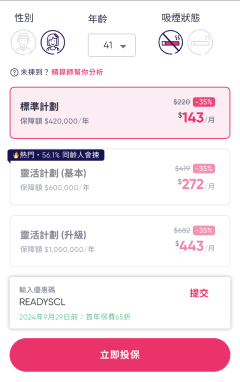
Assume you are a 35-year-old non-smoking male; if you subscribe to Bowtie Term CI Multiple Cover , you only need to pay HK$94 per month in premiums to enjoy an additional critical illness coverage of up to HK$500,000, and the coverage provides up to 5 times multiple coverage for the three major critical illnesses (cancer, stroke, and heart disease), paying 100% each time, allowing you to face the risk of critical illness recurrence without worry and creating a more comprehensive protection net for yourself and your family.
3. Be Cautious of Coverage Gaps
However, if you are surrendering your policy because you found a more suitable critical illness insurance, remember to pay attention to the waiting period of the new coverage.
Keep in mind that most critical illness policies do not take effect immediately. In other words, if you cancel your existing critical illness insurance before the waiting period of the new policy ends, you will be in a “coverage gap” period, during which any diagnosed critical illness will not be compensated.
4. Carefully Calculate Potential Losses (If Any)
As mentioned earlier, if your policy includes an investment component like a savings-type critical illness insurance, early surrender may mean you cannot recover the surrender value of the policy, effectively resulting in a financial loss.
Therefore, you should carefully calculate the current surrender value of the policy before surrendering it. If anything is unclear, consult your insurance intermediary or the insurance company before making a decision.
Don't Want the Hassle of Surrendering? Get Term Critical Illness Insurance!
If you’ve purchased a savings-type critical illness policy, you’ll need to calculate complex investment options or cash value, and ultimately might decide to continue paying premiums after considering the surrender loss.
Don’t want to think about all that when surrendering? Why not buy a pure critical illness policy?
Why say that? Unlike savings-type critical illness policies, pure critical illness policies do not involve investment components. If you decide to surrender, you won’t have to worry about losses from various investment portfolios, achieving “zero binding.”
Besides zero binding, what other features does a pure critical illness policy offer?
Affordable premiums! Since the premiums for pure critical illness policies are entirely used for “protection,” they are lower than savings-type critical illness policies with investment components, offering better value for the same coverage amount. For example, with Bowtie Term CI , the monthly premium is 19 times cheaper* compared to savings critical illness insurance on the market under the same coverage amount.
- *Based on the standard premium for a 35-year-old non-smoking male insuring "Bowtie Term CI" with HK$1 million coverage; Term critical illness insurance: Data is the average of standard premiums for 3 term critical illness policies on the market as of March 10, 2022; Savings-type critical illness insurance: Data is the average of standard premiums for 6 savings critical illness policies offering multiple protections (18-20 year premium payment period) on the market as of March 10, 2022.
I heard pure critical illness policies are very flexible? How exactly?
Imagine you’re planning a trip to a country you’ve never visited before, but you’re not sure how long you want to stay. You have two options: buy a fixed-date round-trip ticket in advance or get an open ticket that allows you to change departure and return dates as needed.
A pure critical illness policy is like an open ticket, providing greater flexibility for the policyholder with relatively lower premiums. If an accident or major illness occurs within the coverage period, you’ll receive the corresponding coverage amount; alternatively, if you no longer need the insurance, you can surrender it without considering financial losses, free from any binding clauses.
How to choose the coverage period – long or short?
Those seeking stable protection can consider longer-term plans, while individuals prioritizing flexibility, adaptability, and liquid funds can opt for shorter-term pure critical illness insurance.
Common Questions About Critical Illness Policy Surrender
Generally, after the insurance company receives the surrender application, they will verify the applicant’s identity and submitted documents, which takes about one to two weeks.
Regardless of whether you’ve purchased a savings-type or pure critical illness policy, you cannot get back the premiums paid upon surrender.
However, since savings-type critical illness policies have a policy cash value, if you’ve held the policy for a sufficient length of time, you might be able to recover an amount equivalent to the premiums paid upon surrender, rather than directly getting back the premiums.
