Insurance
Insurance
Accident Insurance Over 60 & 70 in Hong Kong: Policy Gaps, and VHIS Alternatives
Author
Bowtie Team
Updated on
2026-09-07
As residents in Hong Kong advance into their 60s and 70s, everyday slips, trips, and minor falls can result in severe physical trauma that disrupts retirement living. While many adult children actively seek accidental injury protection for ageing parents, navigating the local insurance landscape reveals restrictive entry age caps, complex exclusions, and substantial coverage reductions. Understanding the structural boundaries of personal accident policies alongside hospitalisation alternatives is crucial for safeguarding elderly healthcare needs.

Elderly individuals in Hong Kong face significantly elevated risks of accidental trauma, with domestic falls representing the leading cause of unintentional injury admissions across local hospitals. Age-related decreases in muscle mass, bone density, and balance coordination mean that a simple slip in a compact bathroom or an uneven doorway can result in severe trauma requiring immediate emergency care and extended rehabilitation.
Data from the Department of Health’s Elderly Health Centre indicates that approximately 15.7% of community-dwelling older adults aged 65 or above experience a fall each year, with nearly 10% of those falls resulting in bone fractures. Academic studies from The Chinese University of Hong Kong (CUHK) show that falls cause more than 95% of senior hip fractures, with over 6,300 elderly individuals sustaining hip fractures annually across the territory. Hospital Authority figures similarly highlight tens of thousands of fall-related admissions each year, generating substantial clinical and economic strain on families.
Beyond immediate hospitalisation, the prolonged recovery associated with fractures, joint dislocations, and head contusions creates heavy financial pressure on retiree savings. A senior recovering from a femoral neck or intertrochanteric fracture often requires private occupational therapy, regular physiotherapy, mobility equipment, and home modifications to regain independence. If reliance is placed solely on out-of-pocket payments, outpatient rehabilitation costs can quickly deplete personal reserves.
However, families attempting to procure personal accident insurance for parents aged 60 or 70 frequently encounter severe market friction. Most conventional insurers enforce tight underwriting guidelines, drastically reduce maximum sums insured upon reaching senior milestones, or outright reject applicants who have crossed standard working age thresholds.
Accidental injury plans are designed to cushion the direct medical and financial fallout of sudden, unexpected trauma caused entirely by external physical forces. In Hong Kong, these policies generally combine reimbursement for acute medical treatments with specific outpatient therapy allowances incurred within a set timeframe following an incident.
It is essential to distinguish between accidental medical reimbursement insurance and traditional lump-sum personal accident insurance. Bowtie Touchwood Accidental Medical Plan, for example, operates strictly on an expense-incurred medical reimbursement model, providing up to HK$420,000 per year for medically necessary treatments resulting from accidents within 12 months, accompanied by a HK$15,000 compassionate death benefit. It does not provide capital lump-sum payouts for accidental death and dismemberment (AD&D) or permanent disablement. Conversely, traditional market personal accident plans historically focus on lump-sum cash compensations for permanent disability or loss of limbs, often offering limited outpatient reimbursement sub-limits.
A comprehensive accidental medical framework typically encompasses the following core features:
Acute Outpatient and Wound Management: Full reimbursement of medically necessary outpatient expenses incurred within 12 months of the trauma, including emergency wound cleansing, surgical sutures, anti-tetanus injections, and local anaesthesia.
Complementary and Specialised Therapies: Coverage for rehabilitative treatments to restore functional mobility, such as registered physiotherapy, chiropractic manipulation, and registered Chinese medicine bone-setting (跌打), often without requiring prior western general practitioner referrals under modern digital plans.
Diagnostic Imaging and Testing: Reimbursement for diagnostic imaging prescribed by a registered medical practitioner, such as clinical X-rays, Computed Tomography (CT) scans, and Magnetic Resonance Imaging (MRI) scans necessary to assess internal skeletal damage or soft-tissue tears.
Inpatient Hospitalisation and Surgical Care: Coverage for room and board, operating theatre fees, and specialist surgeon costs when accidental trauma requires an overnight hospital stay or day-case surgery.
Compassionate Death Benefit: A modest fixed death benefit (such as HK$15,000 under Bowtie Touchwood) payable to nominated beneficiaries to assist with immediate administrative arrangements following fatal trauma.
Traditional market plans may also include scheduled lump sums for defined fractures or permanent total disability. However, these features are frequently paired with strict underwriting exclusions and diminishing capital payout caps as policyholders advance past middle age.
Senior personal accident insurance contracts contain critical structural limitations that frequently catch families off guard during claims assessments. The most consequential pitfall stems from the strict contractual definition of an accident, which requires the bodily injury to be caused solely, directly, and independently of all other causes by violent, accidental, external, and visible means.
Under insurance contract law, claims adjusters evaluate claims using the doctrine of proximate cause.
If an elderly person falls because of an internal medical event—such as sudden vertigo, postural hypotension, cardiac arrhythmia, or a transient ischaemic attack (mini-stroke)—the proximate cause of the trauma is considered an underlying illness rather than an external accident. In such instances, personal accident insurers routinely deny claims for the resulting head injury or fractured limb, leaving the family to absorb all private medical bills.
Furthermore, senior accident policies strictly exclude degenerative conditions and pathological fractures. With advancing age, conditions such as osteoporosis and osteoarthritis become widespread. If an insurer’s medical reviewer concludes that a fracture occurred primarily because bone density was severely degraded rather than from external impact force, the claim may be disputed or rejected.
Age-triggered benefit reductions also represent a standard market practice in conventional plans. In many senior personal accident policies across Hong Kong, accidental death and permanent disablement benefits are automatically halved once the insured attains age 70, even while annual premiums escalate due to higher risk profiling.
Finally, strict age restrictions limit initial availability. Bowtie Touchwood Accidental Medical Plan, for instance, has an entry age limit from 2 to 55 years old, with annual policy renewals permitted only up to age 60 (non-guaranteed). Consequently, parents who are already 60 or 70 years old cannot enrol in Bowtie Touchwood, requiring adult children to look beyond standalone accident policies for their parents’ medical safety net.
For seniors aged 60 and 70, the Voluntary Health Insurance Scheme (VHIS) provides a far more resilient and comprehensive medical safeguard than standalone personal accident coverage. Because VHIS is designed as an all-round individual indemnity hospital insurance programme certified by the Hong Kong Health Bureau, it eliminates the rigid distinction between internal illnesses and external injuries for inpatient and surgical treatments.
Bowtie VHIS plans offer several distinct structural advantages for elderly individuals who have aged out of conventional accident insurance:
Extensive Entry Age Thresholds: While accident policies often shut their doors to individuals over 55 or 65, Bowtie VHIS welcomes applications for individuals from 15 days up to 80 years of age. This allows adult children to secure brand-new medical protection for parents in their 60s and 70s.
Guaranteed Long-Term Renewal: Bowtie VHIS Standard provides guaranteed renewal up to age 100, whereas Bowtie VHIS Flexi and Bowtie Pink provide guaranteed lifetime renewal. The insurer cannot unilaterally cancel cover, alter policy terms, or impose individual premium loading based on subsequent claims or worsening chronic health.
Dual Inpatient Protection for Both Injuries and Illnesses: Whether a 72-year-old parent requires emergency surgery for a hip fracture after slipping or requires planned treatment for a stroke, cataract, or cardiovascular condition, Bowtie VHIS reimburses eligible hospitalisation, operating theatre fees, and specialist charges. Disputes regarding whether a fall was triggered by illness or accident become irrelevant for inpatient care.
Emergency Outpatient Accidental Treatment: Both Bowtie VHIS Flexi and Bowtie Pink incorporate dedicated coverage for emergency outpatient treatments conducted at hospital outpatient clinics or Accident & Emergency (A&E) departments within 24 hours of an accident, bridging the gap between hospital care and acute trauma management.
Coverage for Unknown Pre-Existing Conditions: Under standard VHIS regulatory terms, conditions that existed prior to policy inception but were unknown to the applicant are reimbursed on a phased basis (0% in Year 1, 25% in Year 2, 50% in Year 3, and 100% from Year 4 onwards), offering vital protection against undiagnosed age-related ailments.
Annual Tax Deduction Benefits: Taxpayers paying qualifying VHIS premiums on behalf of certified specified relatives (such as parents aged 55 or above) can claim an annual tax deduction of up to HK$8,000 per insured person under Hong Kong Salaries Tax or Personal Assessment.
Evaluating the differences between standalone senior personal accident plans and Bowtie VHIS clarifies why hospital indemnity insurance forms the true cornerstone of senior protection. While accident plans serve focused trauma reimbursement needs during younger working years, VHIS delivers the broad underwriting flexibility and guaranteed longevity required past age 60.
|
Comparison Metric |
Conventional Senior Accident Plans |
Bowtie VHIS (Standard / Flexi / Pink) |
|---|---|---|
|
Maximum Entry Age |
Typically age 70 to 75 |
Age 80 |
|
Maximum Renewal Age |
Typically age 80 to 85 (non-guaranteed) |
Age 100 (Standard) or Guaranteed Lifetime (Flexi / Pink) |
|
Scope of Medical Protection |
Accidental injuries only; medical events excluded |
Inpatient surgeries and hospitalisation for both accidents and illnesses |
|
Proximate Cause Vulnerability |
High; falls triggered by dizziness or stroke denied |
None for hospitalisation; covers care regardless of medical or trauma trigger |
|
Emergency Outpatient Accidental Benefit |
Modest sub-limits per incident |
Covered in hospital outpatient or A&E within 24 hours (Flexi and Pink) |
|
Standalone Bone-Setting & Outpatient Therapy |
Covered subject to per-visit sub-limits |
Pre- and post-hospitalisation/day surgery physiotherapy only |
|
Tax Deductibility (IRD) |
Not eligible |
Eligible up to HK$8,000 per insured relative per year |
Creating an effective medical safety net for ageing parents requires a strategic approach that balances premium affordability with comprehensive protection against catastrophic private healthcare costs. Adult children can follow a four-step framework to establish resilient coverage.
Conduct a Thorough Medical Audit and Disclose Known Health History Before submitting an online application, compile an accurate summary of your parents’ complete medical background. Standard health conditions such as hypertension, high cholesterol, type 2 diabetes, or degenerative joint conditions must be declared fully during underwriting to ensure transparency and avoid future claim disputes.
Establish Bowtie VHIS as the Foundational Hospitalisation Safety Net Prioritise hospital indemnity coverage over standalone accident policies. A severe fracture or acute cardiac episode requiring private inpatient surgery can easily generate medical bills running into six figures. Securing Bowtie VHIS ensures that room and board, surgeon fees, anaesthetist fees, and intensive care expenses are covered, whether prompted by an accidental slip or a sudden cardiovascular incident.
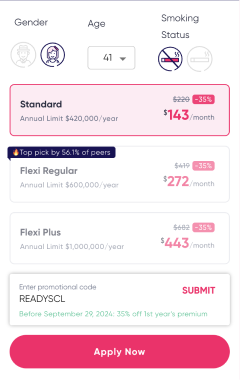
Optimise Premiums Using Voluntary Deductibles To manage recurring premium costs for parents aged 60 to 70 and above, consider selecting a higher deductible plan such as Bowtie Pink (with an annual deductible of HK$20,000, HK$50,000, or HK$80,000).
A moderate deductible substantially lowers the monthly premium while retaining full coverage for catastrophic surgical events. Routine outpatient costs, such as minor sprains or minor consultations, can then be funded comfortably via emergency cash reserves.
Maximise Hong Kong Salaries Tax Deductions When arranging VHIS policies for elderly parents, adult children should act as the policyholder and premium payer. Under the Inland Revenue Ordinance, qualifying premiums paid for certified dependent parents can be claimed under Salaries Tax or Personal Assessment, reducing taxable household income by up to HK$8,000 per parent annually.
Bowtie Touchwood Accidental Medical Plan has an entry age limit of 2 to 55 years old, and policies can only be renewed annually up to age 60 (non-guaranteed). Consequently, parents who are already 60 or 70 years of age are not eligible to enrol in Bowtie Touchwood. However, adult children can consider Bowtie VHIS, which accepts new policyholders up to age 80 and provides guaranteed renewal up to age 100 (Standard) or guaranteed lifetime renewal (Flexi and Pink).
In most circumstances, no. Personal accident policies require that bodily injuries result solely, directly, and independently of all other causes from accidental, external, and violent means. Under the legal doctrine of proximate cause, if an elderly parent falls as a result of an internal medical episode—such as sudden syncope, a stroke, cardiac arrhythmia, or severe dizziness—insurers classify the event as illness-related and deny the claim. In contrast, Bowtie VHIS covers medically necessary hospitalisation and surgical procedures irrespective of whether the admission was prompted by an internal disease or external trauma.
Bowtie VHIS reimburses outpatient physiotherapy when it is medically necessary and conducted as pre- or post-hospitalisation or day-case surgery care within specified contractual timeframes (typically within 90 days before admission or after discharge). In addition, Bowtie VHIS Flexi and Bowtie Pink include an Emergency Outpatient Accidental Treatment benefit for care administered in a hospital outpatient or A&E department within 24 hours of an accident. However, standalone visits to community Chinese medicine bone-setters (跌打) or routine outpatient clinics without an associated hospitalisation or day surgery are not covered under VHIS, whereas plans like Bowtie Touchwood reimburse standalone outpatient treatments for insured individuals under age 60.
Under the Hong Kong Inland Revenue Ordinance, taxpayers paying qualifying VHIS premiums for themselves or specified relatives—including parents, grandparents, spouses, or children—can claim a deduction against their Salaries Tax or Personal Assessment liability. The maximum tax deduction cap is HK$8,000 per insured person for each year of assessment. There is no ceiling on the number of eligible dependent relatives a taxpayer can claim for, allowing adult children who support both ageing parents to claim up to HK$16,000 in total deductions annually.


© 2026 Bowtie Life Insurance Company Limited. All rights reserved.