Author
Bowtie Team
Updated on
2025-07-22
Disclaimer: This article is translated with the assistance of AI.
1. What’s the Difference Between Hospital Insurance and Critical Illness Insurance?
Fred: Hospital medical insurance reimburses actual expenses; while critical illness insurance provides a lump-sum payout, which can be seen as a financial “reserve” when you suffer from a serious illness. Suppose you unfortunately contract any covered critical illness; you can also use the critical illness compensation to cover living expenses, such as mortgage payments, daily expenditures, children’s tuition, etc.
Even if you lose your job due to illness or need to take leave to recuperate, you don’t have to worry about daily expenses and can focus on your treatment!
2. Is More Diseases Covered by Critical Illness Insurance Better?
Fred: Not necessarily. Even if critical illness insurance covers many diseases, if it’s not precise enough, you might end up paying extra premiums without adequate protection.
Based on past data, you’ll find that 98% of critical illness insurance claims come from 38 common critical illnesses, including cancer, heart disease, stroke, kidney failure, and so on. Even if it covers over 100 diseases, if it doesn’t include these 38 common ones, the coverage gap is still huge. “Smart coverage” means meeting your needs with precise protection—this is definitely a key point in getting insured!
3. What If Coverage Isn’t Broad Enough for Rare or New Critical Illnesses?
Fred: Another key point of critical illness insurance is to extend coverage to unpredictable and unforeseen severe conditions. Bowtie Term CI innovates with the “38+4” compensation criteria, meaning in addition to covering 38 common critical illnesses, it also features the Bowtie Safety Net, protecting 4 situations. As long as you meet any one of the following compensation criteria, you’ll get a full 100% lump-sum payout!
The 4 situations include:
With this safety net, you get comprehensive protection for both known and unknown diseases!
4. Why Are Some Critical Illness Claims Denied? Understanding Definitions
Fred: Indeed, every insurance company in Hong Kong has its own definitions for covered critical illnesses, making it hard for the public to understand and compare. Many people only discover they don’t qualify for claims when filing, leading to situations where “you bought insurance but can’t get compensated.” To make compensation criteria more credible, simple, and clear, Bowtie references standard definitions from the UK, Singapore, Taiwan, and others to design and define covered critical illnesses. The relevant information can be viewed online .
5. Is Savings-Linked Critical Illness Insurance Better? Save Money and Get Partial Premiums Back Even Without Claims!
Fred: Not necessarily—it depends on your personal needs! Critical illness insurance comes in “savings-linked” and “pure protection” types. Even with the same coverage amount, their premiums can differ by up to 22 times. Bowtie researched 8 savings-linked critical illness plans on the market with HK$1 million coverage, finding an average guaranteed return of about -0.87% per year over 30 years. To “break even,” you’d need to wait nearly 45 years. Plus, savings-linked plans cost thousands per month. If you surrender the policy, you might face surrender fees, and some deduct from the cash value, potentially leaving you worse off—losing money instead of breaking even! So, think carefully if this is the best way to save or invest.
6. How Affordable Are Pure Protection Critical Illness Plans?
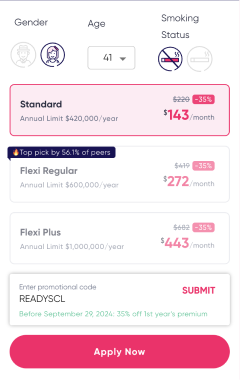
Fred: Compared to savings-linked plans, pure protection products offer higher coverage at a lower price. Take Bowtie Term CI as an example—it’s 100% pure protection, with no bundling or savings components. For me, a 37-year-old non-smoking male, the standard premium for every HK$1 million in critical illness coverage is just HK$167 per month. Flexible and low-burden!
Want to know your premium? Just head to Bowtie website to check all the details and get an instant personalized quote! No medical exam or phone calls needed—results in no time!

© 2026 Bowtie Life Insurance Company Limited. All rights reserved.