Insurance
Insurance
Freelance Fitness Instructor Insurance: Guide to Sports Injury Medical Bills & Liability Cover
Author
Bowtie Team
Updated on
2026-09-05
Freelance fitness instructors and personal trainers in Hong Kong operate in an active, physically demanding environment where bodily movement is their primary earning asset. Unlike gym employees on regular payroll, self-employed trainers do not receive statutory sick leave, employer-sponsored medical benefits, or mandatory workplace injury coverage. A single slip during a demonstration, an acute ligament tear while spotting a client, or a sudden joint dislocation can bring professional coaching to an immediate halt, jeopardising personal income while racking up substantial private medical bills.

Freelance fitness coaches and personal trainers require dedicated insurance because they operate as self-employed independent contractors, excluding them from statutory workplace injury protections. If an unexpected training accident occurs, an instructor must personally absorb private medical costs while enduring an unpaid recovery period that directly threatens their livelihood.
Under Hong Kong’s Employees’ Compensation Ordinance (Cap. 282), employers are legally obligated to maintain insurance policies that compensate employees for injuries sustained during the course of employment. However, independent trainers, freelance yoga instructors, and mobile fitness professionals are classified as self-employed contractors operating under contracts for service rather than contracts of service. Because the host gym or fitness facility carries no statutory duty to insure non-employed coaching staff, an injured freelancer cannot claim statutory medical expenses, temporary incapacity payments, or lump-sum compensation through the commercial gym’s policy.
Furthermore, physical condition and mobility represent a fitness instructor’s foundational business capital. In conventional office occupations, a fractured ankle or severe ligament sprain rarely eliminates one’s ability to earn a living. For fitness coaches, however, inability to demonstrate movements, spot heavy lifts, or lead high-intensity classes halts daily billable hours instantly. Securing individual insurance guarantees fast access to private orthopaedic specialists, advanced diagnostic imaging, and prompt rehabilitation without waiting months in the public healthcare system.
Sports injuries sustained during coaching range from outpatient sprains to catastrophic joint trauma, with private healthcare fees in Hong Kong presenting significant financial liabilities. Outpatient physical therapies require sustained weekly budgeting, whereas complex orthopaedic surgeries at local private hospitals routinely exceed six figures.
Insurance providers strictly distinguish between acute accidental trauma and chronic occupational strain. Personal accident policies cover sudden, unforeseen, and violent external events—such as an unexpected barbell drop causing a bone fracture, or an awkward landing that tears a knee ligament. Conversely, cumulative wear and tear, chronic tendonitis, spinal disc degeneration from years of heavy lifting, or gradual posture fatigue are excluded from accident definitions and must be addressed through general medical plans.
When acute trauma strikes, seeking treatment within Hong Kong’s private healthcare system incurs substantial costs across initial diagnostics, surgical procedures, and post-operative physical rehabilitation. The table below outlines typical private medical charges for common coaching sports injuries across Hong Kong:
|
Injury Type |
Private Medical Procedure / Treatment |
Estimated Private Healthcare Cost (HKD) |
|---|---|---|
|
Anterior Cruciate Ligament (ACL) Tear |
Inpatient Arthroscopic ACL Reconstruction (Single Leg, e.g. Gleneagles Hospital or CUHK Medical Centre) |
HK$110,000 – HK$200,000+ |
|
Meniscus Tear / Joint Locking |
Arthroscopic Meniscectomy / Meniscal Repair (Day Case or Inpatient) |
HK$60,000 – HK$100,000 |
|
Bone Fracture or Joint Dislocation |
Open / Closed Fracture Reduction, Internal Fixation, and Emergency Care |
HK$30,000 – HK$80,000 |
|
Severe Ligament Sprain / Soft Tissue Tear |
Specialist Orthopaedic Consultation with Diagnostic MRI Examination |
HK$7,000 – HK$15,000 |
|
Post-Injury Musculoskeletal Rehabilitation |
Private Clinic Physiotherapy (Per Session) |
HK$950 – HK$1,300 |
|
Traumatic Joint / Bone Manipulation |
Registered Chinese Medicine Bone-Setting (跌打, Per Visit) |
HK$350 – HK$600 |
Surgeries such as arthroscopic anterior cruciate ligament (ACL) reconstruction at leading private institutions—including CUHK Medical Centre and Gleneagles Hospital Hong Kong—frequently cost between HK$111,000 and over HK$200,000 depending on room type, graft material, and whether concurrent meniscal repair is necessary. Following surgery, an instructor typically requires 20 to 40 private physiotherapy sessions over a six-to-nine-month rehabilitation cycle, adding HK$20,000 to HK$50,000 in outpatient bills alone. Without tailored insurance, paying these expenses out of pocket can exhaust years of freelance savings.
A comprehensive safety net for self-employed fitness instructors rests upon three distinct coverage pillars: Personal Accident Insurance, Hospitalisation Insurance, and Professional Liability Insurance. Relying on any single policy creates dangerous financial blind spots that leave coaches exposed to unexpected medical bills or civil lawsuits.
Personal Accident Insurance: Acts as an agile, first-tier reimbursement tool for sudden physical injuries. It delivers non-deductible reimbursements for outpatient emergency consultations, diagnostic X-rays, registered physiotherapy, and bone-setting, alongside lump-sum cash benefits in the event of permanent accidental disablement.
Hospitalisation and Surgical Cover (such as VHIS): Steps in for catastrophic inpatient procedures, room and board, operating theatre charges, and expensive diagnostic scans (such as MRI or CT scans) that readily breach the outpatient limits of personal accident plans.
Professional Liability and Public Liability Insurance: Shields independent trainers against legal defence costs and civil damages if a client sustains an injury during training or if rental gym premises and equipment suffer accidental damage.
Personal accident insurance is the most accessible financial safeguard for everyday coaching injuries, but policyholders must closely inspect its outpatient sub-limits and referral criteria. While headline accidental medical coverage may advertise hundreds of thousands of dollars per policy year, outpatient physical therapy benefits are tightly governed by per-visit and annual frequency caps.
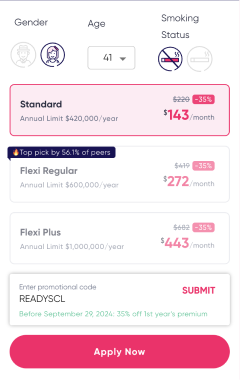
For instance, comprehensive standalone policies like Bowtie Accident Insurance offer up to HK$420,000 in accidental medical expenses per policy year on a reimbursement basis. However, insurers universally enforce sub-limits on complementary and physical rehabilitation treatments:
Per-Visit Reimbursement Caps: Consultations with registered physiotherapists, chiropractors, or registered Chinese medicine practitioners (including bone-setting / 跌打) are typically capped at HK$250 to HK$500 per visit.
Annual Visit Limits: Policies often cap eligible therapy visits at 15 to 30 sessions per policy year or per accidental injury.
Practitioner Qualifications: Medical claims require care administered by Registered Medical Practitioners, Registered Physiotherapists, or Registered Chinese Medicine Practitioners licensed in Hong Kong.
Doctor Referral Mandate: Most accidental medical policies stipulate that to claim physiotherapy reimbursement, the claimant must present an official written referral letter issued by a Western medical practitioner prior to commencing therapy.
Liability insurance provides legal defence and indemnity protection when a client or gym facility makes a financial claim against a freelance instructor. Coaching involves physical exertion, loaded movements, and shared spaces, creating inherent exposure to professional negligence allegations and facility property disputes.
Professional Indemnity (PI) Insurance: Protects the instructor against claims alleging bodily injury arising from negligent instruction, faulty programming, inadequate warm-ups, or improper spotting. Industry schemes (such as the AASFP TrainerSafe programme) commonly provide indemnity coverage up to HK$600,000 or more to cover legal representation fees and court-awarded damages.
Public Liability (PL) Insurance: Safeguards against third-party bodily injury and property damage occurring on rental gym premises, studio floors, or outdoor parks. For example, if a client drops an Olympic barbell that shatters imported flooring or injures a bystander in a shared space, public liability covers the repair bills and medical liabilities.
Facility Entry Requirements: A growing number of commercial fitness chains, 24-hour gym franchises, and boutique rental studios across Hong Kong mandate that freelance instructors produce a valid certificate of public liability insurance before allowing them to conduct commercial coaching sessions on-site.
Underwriting guidelines for self-employed trainer insurance require careful review, as an insurer assesses occupational risk strictly based on the physical hazards of the sport taught. Misrepresenting daily coaching activities or engaging in excluded athletic pursuits will result in rejected claims.
Insurers categorise professions into risk classes (typically Classes 1 to 4). General personal trainers, Pilates instructors, and yoga teachers coaching in non-hazardous gym environments are routinely assigned to Class 2 (low-to-moderate occupational risk), qualifying for standard premium rates. However, instructors coaching contact combat sports (such as Brazilian Jiu-Jitsu, Muay Thai, or mixed martial arts), gymnastics coaches, or commercial stunt trainers may be placed in higher-risk brackets, subjected to premium loadings, or declined for accidental medical coverage.
Furthermore, trainers must remain mindful of policy exclusions regarding athletic competitions. While teaching recreational clients or conducting fitness classes is fully insurable, competing in professional sporting events, paid exhibition bouts, or extreme motor sports is routinely excluded under standard personal accident plans. Lastly, claims officers rigorously review medical documentation for pre-existing musculoskeletal degeneration; acute traumatic damage must be clearly documented to avoid the universal “wear and tear” exclusion.
Securing reimbursement under a personal accident policy requires strict adherence to administrative protocols and prompt clinical record collection. Following this step-by-step workflow ensures an efficient claim assessment without unnecessary delays:
Seek Immediate Medical Attention: Visit a registered medical practitioner, an outpatient clinic, or a hospital emergency room within 24 to 48 hours of the training accident. Ensure the attending physician explicitly records the exact date, time, and accidental mechanism of injury on the clinical notes.
Obtain Written Referral Letters: If the treating physician suggests physical rehabilitation or advanced diagnostics, request formal referral letters for registered physiotherapy or diagnostic imaging (such as an MRI or X-ray) before booking appointments.
Compile Itemised Documentation: Collect and retain all original documents, including official consultation receipts, itemised physiotherapy breakdown invoices, prescription medicine receipts, diagnostic radiology reports, and sick leave certificates.
Submit Claim Within the Policy Deadline: Complete the insurer’s formal claim application—either via their online portal or paper form—and submit all scanned or original paperwork within the mandatory notification window (typically within 30 days of the accidental incident).
No. Independent freelance instructors are classified as self-employed contractors rather than employees under Hong Kong law. As a result, the host gym’s statutory Employees’ Compensation Insurance (mandated under Cap. 282) does not extend to freelance instructors if they sustain an injury while conducting their own sessions. Freelancers must carry their own individual accident and medical insurance.
Yes, most personal accident policies in Hong Kong allow claims for both registered physiotherapy and registered Chinese medicine bone-setting (跌打), provided the treatments directly address an acute accident. However, claims remain subject to policy per-visit sub-limits, annual session limits, and the mandatory requirement of a registered medical practitioner’s written referral before starting physiotherapy.
No. Personal accident insurance strictly covers injuries caused by sudden, unforeseen, and external physical trauma, such as bone fractures or acute ligament tears. Chronic overuse issues, muscle fatigue, and degenerative joint conditions developed gradually over months of coaching are classified as wear and tear and are explicitly excluded.
Under Section 7(1) of Hong Kong’s Control of Exemption Clauses Ordinance (Cap. 71), any contractual clause or notice that attempts to exclude or restrict liability for death or personal injury resulting from negligence is legally void. If a client suffers an injury due to coaching negligence, a signed waiver will not prevent civil legal claims, making Professional Indemnity insurance essential for legal defence and indemnity.


© 2026 Bowtie Life Insurance Company Limited. All rights reserved.