Insurance
Insurance
Disciplined Services Insurance Guide: Coverage for Off-Duty Injuries, Gaps in Civil Service Benefits, and Key Accident Policies
Author
Bowtie Team
Updated on
2026-09-05
Members of the disciplined services in Hong Kong face distinct occupational hazards during their shifts, but their exposure to accidental injuries does not vanish once they clock off. From high-intensity recreational sports and physical conditioning to domestic mishaps and traffic collisions, an off-duty injury can abruptly threaten an officer’s operational fitness and personal finances. While on-duty accidents are protected under robust statutory and governmental compensation frameworks, injuries sustained during personal time fall into a very different administrative category, exposing substantial gaps in medical reimbursement and income protection.

Disciplined services officers enjoy extensive statutory protection for duty-related incidents, but off-duty mishaps fall entirely outside statutory work injury frameworks. When an accident occurs while an officer is off duty, the legal mechanism, sick leave entitlement, and medical reimbursement provisions differ fundamentally from injuries sustained during active duty.
For on-duty injuries, civil servants in Hong Kong are protected under the Employees’ Compensation Ordinance (ECO, Cap. 282) and the Civil Service Regulations (CSRs). Under this regime, an officer injured in the actual discharge of duty may receive paid injury-on-duty (IOD) sick leave for up to 24 months, which can be extended by a further 12 months in exceptional cases subject to departmental approval. In severe cases involving permanent loss of earning capacity or fatal accidents, statutory compensation or enhanced pension payments are granted under the relevant pensions legislation and ECO schedules.
Conversely, off-duty accidents—such as ligament tears sustained during amateur football matches, fractures from trail running or gym workouts, or injuries suffered in private traffic collisions—do not qualify under the Employees’ Compensation Ordinance. Because these mishaps do not arise out of and in the course of employment, the Hong Kong Government provides no statutory work injury compensation, no lump-sum disability payouts, and no 24-month IOD sick leave regime. Instead, officers must draw from their standard accumulated paid sick leave quotas provided under regular CSR provisions.
An important nuance exists regarding off-duty interventions. Under departmental standing orders and police regulations, if an off-duty officer sustains injuries whilst taking legitimate action to prevent a crime, protect human life, or maintain public safety, the case is subject to case-by-case assessment by the department and the Labour Department. If the authorities determine that the officer was acting in the lawful execution of duty, the incident may be classified as an injury sustained in the actual discharge of duty, thereby unlocking statutory IOD protections. However, purely personal leisure or domestic accidents never qualify for this reclassification.
While Civil Service Eligible Persons (CSEPs) are entitled to medical care within the public healthcare sector, severe public hospital waiting times and the complete exclusion of private outpatient allied health services create acute recovery challenges. Relying solely on government medical entitlements after an off-duty injury can severely delay rehabilitation and operational readiness.
Key limitations of the civil service medical system for off-duty accidents include:
Exclusive reliance on the public system: Civil service medical benefits grant free consultations and inpatient treatment solely at Hospital Authority (HA) facilities and Department of Health (DH) clinics, subject only to nominal daily hospital maintenance fees under the CSRs. Private clinics and private hospitals are not covered.
Prolonged waiting times for imaging and orthopaedics: Non-emergency triage at HA Accident and Emergency departments can take hours, whilst specialist outpatient orthopaedic appointments and non-urgent diagnostic imaging (such as MRI and CT scans) can take months or even over a year in the public sector. For an active officer with a suspected torn cruciate ligament or meniscal injury, these delays can result in prolonged physical incapacity.
No coverage for private consultations or imaging: Civil service medical provisions do not reimburse consultations with private orthopaedic specialists or scans conducted at private diagnostic imaging centres, unless exceptional prior approval is granted by the Department of Health under strict medical necessity criteria.
Out-of-pocket costs for essential outpatient therapies: Effective recovery from joint sprains, muscle tears, and bone trauma often relies on private physiotherapy, traditional Chinese medicine bone-setting (跌打), acupuncture, and chiropractic adjustments. None of these private outpatient treatments are reimbursable under standard civil service medical provisions and must be paid out of pocket by the officer.
Traditional insurance companies have historically viewed disciplined services personnel through a conservative risk lens, imposing substantial underwriting hurdles that penalise frontline officers. Understanding these market practices helps officers identify policies that offer fair and uncompromised coverage.
When assessing personal accident policies, traditional underwriters commonly classify frontline disciplined forces—including the Police Tactical Unit (PTU), Emergency Unit (EU), Fire Services Department (FSD), and the Correctional Services Department (CSD)—under Class 3 or Class 4 high-risk occupational categories. Because these roles involve physical confrontation, tactical operations, and emergency rescues, conventional insurers often introduce hefty premium loadings, frequently increasing annual premiums by 50% to 100% compared to standard clerical rates. In many cases, frontline tactical personnel are rejected outright.
Furthermore, many conventional accident contracts feature broad exclusion clauses. Some policies expressly exclude any accident that occurs during the service or training of armed forces or disciplined services, whilst others disallow claims arising from physical conditioning exercises mandated by an employer. Such exclusions leave officers vulnerable to claim disputes even when injuries occur during off-duty fitness training.
However, the belief that disciplined personnel cannot secure equitable accident insurance is a common myth. Modern virtual insurers have redefined occupational underwriting by assessing risk based on broader population data rather than rigid occupational penalties. Digital providers now offer comprehensive accident coverage that accepts disciplined forces alongside civilian roles at standard premium rates, without discriminatory surcharges or operational exclusions.
Selecting an accident insurance policy as a disciplined officer requires scrutinising the fine print to ensure seamless protection across both professional duties and private life. The following features represent the essential checklist for frontline personnel seeking police accident insurance or firefighter accident insurance:
Universal occupational acceptance without loadings: The policy should explicitly cover disciplined services personnel without imposing Class 3 or Class 4 premium surcharges. Modern plans, such as Bowtie Touchwood Personal Accident Insurance, accept over 700 occupations—including disciplined services—at standard rates without occupational loadings.
24/7 Worldwide round-the-clock protection: Comprehensive policies must protect officers both on-duty and off-duty, covering daily commuting, family life, international holidays, and recreational sports such as basketball, hiking, marathon training, and gym workouts.
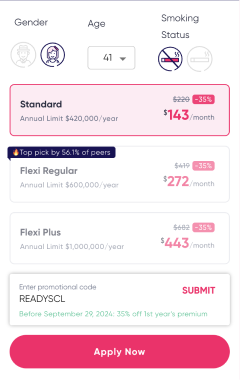
Substantial medical expense reimbursement: Prioritise plans that reimburse actual eligible medical expenses up to a robust annual limit (e.g. HK$420,000 per policy year under Bowtie Touchwood) across both outpatient consultations and inpatient surgical treatments.
Clear referral pathways for rehabilitation therapies: Musculoskeletal recovery demands flexibility. Ensure the policy provides direct access to traditional Chinese bone-setting (跌打) and chiropractic care without requiring a doctor’s referral letter, whilst offering reimbursement for private physiotherapy backed by a registered Western medical practitioner’s written referral.
Diagnostic imaging coverage: The policy should cover prescribed advanced imaging—including MRI, CT, and PET scans—enabling officers to bypass public hospital waiting lists and receive immediate diagnostic clarity in private imaging centres.
Trauma and psychological support: Severe accidents or duty-related traumatic exposures can lead to acute mental health challenges. Opt for policies that reimburse specialist psychiatric consultations or clinical psychological treatment following an accidental injury.
A head-to-head comparison illustrates how private personal accident medical insurance complements the public healthcare safety net for off-duty mishaps:
|
Comparison Dimension |
Civil Service Medical Benefits (Public Entitlements) |
Private Accident Medical Insurance (e.g. Bowtie Touchwood) |
|---|---|---|
|
Scope of Healthcare Facilities |
Strictly restricted to Hospital Authority (HA) public hospitals and Department of Health (DH) clinics. |
Covers registered private general clinics, specialist clinics, private imaging centres, and private hospitals. |
|
Treatment Waiting Times |
Subject to lengthy public hospital triage and outpatient queues (weeks to months for non-emergency scans and orthopaedics). |
Immediate private medical attention, same-day specialist consultations, and rapid private imaging. |
|
Outpatient Rehabilitation & Alternative Care |
Highly limited public physiotherapy quotas; zero coverage for private bone-setting (跌打), acupuncture, or chiropractic care. |
Reimburses private physiotherapy, chiropractic care, and traditional Chinese medicine bone-setting (跌打). |
|
Allied Health Referral Requirements |
Requires an internal public hospital/clinic doctor referral to access HA physiotherapy queues. |
Direct access to bone-setting (跌打) without a referral; private physiotherapy requires a registered Western doctor’s written referral. |
|
Off-Duty Permanent Disability Payout |
Nil under ECO (statutory compensation applies exclusively to on-duty accidents). |
Bowtie Touchwood is an accident medical reimbursement plan (up to HK$420,000/year plus HK$15,000 compassionate death benefit); lump-sum capital disability payouts require separate AD&D or term life policies. |
|
Annual Medical Benefit Limit |
Fully subsidised public rates under CSRs (patients pay only basic daily maintenance fees). |
Reimburses actual eligible medical and surgical expenses up to HK$420,000 per policy year. |
A resilient financial defence strategy requires disciplined services personnel to coordinate specialized accident policies with broader hospital indemnity schemes. No single policy addresses every medical vulnerability, but combining complementary layers builds a complete safety net.
Recognise the distinct role of accident insurance: Accident medical insurance is designed for high-frequency, acute trauma. It excels at reimbursing out-of-pocket costs for minor lacerations, joint sprains, advanced diagnostic scans (MRI/CT), bone-setting, and private physiotherapy—expenses that standard hospitalisation policies generally do not cover unless tied to formal inpatient confinement.
Integrate with VHIS or VMIS for major medical events: Accident insurance does not cover illnesses such as cancer, cardiac conditions, or scheduled elective surgeries. Officers should pair personal accident cover with a certified Voluntary Health Insurance Scheme (VHIS) plan—or explore Civil Service Voluntary Medical Insurance Scheme (VMIS) options—to ensure complete coverage for major private hospital admissions, complex surgeries, and non-accidental conditions.
Bridge the post-2000 civil service retirement gap: Under current employment terms, civil servants appointed on or after 1 June 2000 cease to be eligible for civil service medical and dental benefits upon retirement. Relying solely on government clinic entitlements during active service leaves officers completely unprotected in their post-retirement years. Securing personal medical and accident protection early ensures guaranteed renewal into retirement without underwriting exclusions for conditions developed over a career.
Protect dependent family members: Spouses and dependent children are equally exposed to everyday domestic, school, and sports injuries. Extending comprehensive accident insurance across the household shields the family budget from cumulative private outpatient and diagnostic costs.
Navigating insurance claims smoothly after an unexpected injury requires prompt clinical documentation and clear procedural discipline. Following these steps ensures your reimbursement is processed without administrative delays:
Seek immediate medical treatment and obtain necessary referrals: Consult a registered medical practitioner, attend an urgent care clinic, or visit an emergency room promptly after the mishap. Clearly explain to the attending doctor the exact date, location, and mechanism of the accident, ensuring these clinical notes are documented in your medical record. If you require physiotherapy, request a formal written referral letter from the registered Western medical doctor during this initial consultation.
Preserve all original documentation: Secure and retain all original itemised medical invoices, official diagnostic imaging reports (such as X-ray, CT, or MRI interpretations), laboratory reports, doctor referral letters, and registered sick leave certificates. Ensure each receipt specifies the patient’s name, treatment date, and diagnosis.
Submit claims through digital channels: Complete the claim process through your insurer’s online portal (such as Bowtie’s digital claims interface) within the policy notification window, which is typically within 30 days of receiving treatment. Upload clear photographs or scanned copies of all receipts and medical documents.
Coordinate multi-policy claims: If your medical expenses exceed single-policy sub-limits, or if you are coordinating reimbursement between civil service entitlements, an employer benefit plan, and a personal VHIS or accident policy, request certified true copies of your receipts and settlement vouchers from the primary insurer to claim remaining balances from your secondary provider.
No. Statutory compensation under the Employees’ Compensation Ordinance (Cap. 282) and full-pay Injury-on-Duty (IOD) sick leave under the Civil Service Regulations apply strictly to injuries arising out of and in the course of employment. Off-duty accidents—such as injuries sustained during personal sports, gym workouts, hiking, or private travel—are treated as non-work-related. The Government does not provide statutory compensation or lump-sum disability payouts for off-duty mishaps, and officers must utilise their standard accumulated paid sick leave quotas.
Potentially yes. Under departmental regulations, when an off-duty disciplined officer takes legitimate, necessary action to prevent a crime, preserve public order, or protect life, the case is reviewed on its individual merits by the department and the Labour Department. If the authorities confirm that the officer was acting in the lawful discharge of duty, the incident may be officially reclassified as an injury sustained on duty, thereby granting access to statutory IOD sick leave and compensation provisions.
No. Civil service medical and dental benefits are strictly confined to medical care provided by Hospital Authority (HA) hospitals and Department of Health (DH) clinics. The Government does not reimburse expenses for private medical practitioners, private diagnostic centres, private physiotherapy, or traditional Chinese bone-setting (跌打) for off-duty accidental injuries. These treatments must be paid entirely out of pocket unless covered by a private personal accident insurance policy.
Traditional underwriters frequently assign frontline emergency personnel, firefighters, and tactical police officers to high-risk occupational categories (Class 3 or Class 4). Consequently, standard retail accident policies often impose heavy premium surcharges (frequently loading premiums by 50% to 100%), exclude duty-related activities, or decline applications entirely. Modern virtual insurers, however, have updated these underwriting frameworks, offering accident protection to disciplined services personnel at standard premium rates without occupational loadings.
Bowtie Touchwood covers over 700 occupations—including disciplined services personnel—at standard rates without occupational premium loading. It provides up to HK$420,000 per policy year on a reimbursement basis for actual medical expenses resulting from accidents. Covered benefits include private outpatient treatment, day and inpatient surgery, prescribed diagnostic imaging (MRI, CT, PET scans), post-accident psychiatric treatment, direct access to traditional Chinese bone-setting (跌打) and chiropractic care without a doctor’s referral, and private physiotherapy supported by a registered Western doctor’s referral letter. It is an accident medical expense reimbursement policy (with a HK$15,000 compassionate death benefit) rather than a lump-sum permanent disability capital policy.

© 2026 Bowtie Life Insurance Company Limited. All rights reserved.