Insurance
Insurance
Senior Hip Fracture in Hong Kong: Surgery Costs, Rehabilitation, and Insurance Coverage Guide
Author
Bowtie Team
Updated on
2026-09-05
A senior hip fracture is one of the most critical health emergencies faced by older adults in Hong Kong, requiring immediate surgical intervention and extensive post-operative rehabilitation. While families must navigate urgent medical decisions within hours of a fall, understanding the financial implications—ranging from subsidised public hospital charges to six-figure private surgical bills—is essential for making informed care choices. This comprehensive guide details clinical treatment pathways, public versus private hospital fee structures, and the distinct roles that medical and accident insurance play in safeguarding elderly patients.

Senior hip fractures in Hong Kong represent a severe public health challenge characterised by high incidence, debilitating loss of independence, and substantial mortality risks. Because ageing bones are frequently compromised by underlying osteoporosis, even a minor slip or low-impact trip at home can lead to catastrophic structural failure of the femur. Prompt recognition and immediate emergency care are vital to prevent irreversible functional decline.
Predominance of low-impact indoor falls: Falls account for more than 95% of all senior hip fractures in Hong Kong, with the vast majority occurring in everyday domestic environments such as bathrooms, bedrooms, and tiled living rooms where bone fragility turns minor stumbles into acute emergencies.
Surging local incidence and demographic pressure: Hospital Authority data indicates that over 7,500 elderly residents suffer hip fractures each year in Hong Kong. Furthermore, projections by the Osteoporosis Society of Hong Kong warn that annual cases could surge past 27,000 by 2050 as the city’s population ages rapidly.
High excess mortality and loss of mobility: Fragility hip fractures carry devastating clinical consequences; over 30% of elderly patients permanently lose independent mobility, and one-year excess mortality ranges from 15% to 25% due to secondary complications such as hypostatic pneumonia, deep vein thrombosis, and sepsis.
Elevated risk of secondary fractures: Approximately 10% of elderly survivors sustain a second contralateral hip fracture within two years of the initial injury, demonstrating the urgent need for long-term osteoporosis management, fall prevention, and structured physical rehabilitation.
Clinical management of an elderly hip fracture prioritises prompt surgical stabilisation within the internationally recognised “golden 48 hours” to minimise severe immobilisation risks. Operating within 48 hours of hospital admission dramatically lowers the incidence of pressure ulcers, pulmonary infections, cardiovascular events, and 30-day mortality. Achieving this timeline requires seamless orthogeriatric co-management between orthopaedic surgeons, anaesthetists, and geriatricians to medically stabilise the senior patient without unnecessary delays.
Depending on the precise anatomical location of the fracture and the patient’s pre-existing joint condition, surgeons deploy one of two primary operative approaches:
Open Reduction and Internal Fixation (ORIF): This technique is primarily utilised for trochanteric, intertrochanteric, or non-displaced femoral neck fractures. Surgeons realign the broken bone fragments and secure them mechanically using internal metal hardware—such as dynamic hip screws (DHS), sliding hip screws, intramedullary nails, or contoured plates. This reconstructive approach preserves the patient’s biological femoral head and promotes natural osseous healing.
Arthroplasty (Hemiarthroplasty or Total Hip Replacement): When an elderly patient sustains a displaced intracapsular femoral neck fracture, the blood supply to the femoral head is frequently severed, resulting in a high risk of avascular necrosis and non-union. In these cases, joint replacement is indicated. Hemiarthroplasty replaces only the damaged femoral head with an artificial ball prosthesis, whilst Total Hip Replacement (THR) replaces both the femoral head and the acetabular socket. Arthroplasty allows elderly patients to bear weight almost immediately post-surgery, substantially shortening bed-rest duration.
Underpinning both surgical methods is orthogeriatric co-management. Because most seniors presenting with hip fractures live with multiple chronic illnesses—including hypertension, type 2 diabetes, renal impairment, or cardiovascular disorders requiring antiplatelet or anticoagulant medications—a dedicated geriatrician works alongside the surgical team. This specialist reviews blood chemistry, manages peri-operative fluid balance, corrects electrolyte disturbances, and balances anticoagulant cessation against stroke risk, ensuring the patient safely clears anaesthetic screening within the critical 48-hour window.
Healthcare expenses for senior hip fractures in Hong Kong vary dramatically between public Hospital Authority (HA) facilities and the private medical sector, reflecting the city’s dual-track healthcare system. Public hospitals offer a heavily subsidised safety net suitable for emergency fragility management, whereas private hospitals provide immediate surgical scheduling, private ward options, and intensive personalised rehabilitation. Choosing between the two requires balancing emergency waiting conditions against total out-of-pocket expenditure.
Public acute hospitals handle more than 95% of fragility hip fracture admissions across Hong Kong via their Accident & Emergency (A&E) departments. While the acute surgical care delivered in public trauma centres is world-class, post-operative step-down beds in convalescent and rehabilitation hospitals face severe demand pressure. Patients often experience congested general wards and limited daily physiotherapy allocations. Conversely, private hospitals allow families to select their orthopaedic specialist, schedule surgery within 12 to 24 hours, and receive daily dedicated one-on-one physical therapy; however, unbundled fees for operating theatres, surgical implants, and high-dependency care can result in substantial private bills.
Under the revised fee schedule implemented across all Hospital Authority public healthcare institutions starting 1 January 2026, charges for eligible Hong Kong identity card holders remain heavily subsidised while introducing revised fee tiers and an overarching safety net cap.
|
Public Healthcare Service Category |
Revised HA Fee (Effective 1 January 2026) |
Notes & Clinical Relevance |
|---|---|---|
|
Accident & Emergency (A&E) – Cat 1 (Critical) & Cat 2 (Emergency) |
HK$0 (Waived) |
Applies to life-threatening trauma or severe haemodynamic instability upon initial triage. |
|
Accident & Emergency (A&E) – Cat 3 (Urgent) to Cat 5 (Non-urgent) |
HK$400 per attendance |
Most stable elderly fracture patients triaged as Urgent pay this admission assessment fee. |
|
Acute General Inpatient Bed |
HK$300 per day |
Daily hospitalisation maintenance fee (the previous one-off admission fee has been abolished). |
|
Convalescent & Rehabilitation Bed |
HK$200 per day |
Applies during step-down physical recovery and occupational therapy in extended-care hospitals. |
|
Specialist Outpatient Clinic (SOPC) & Allied Health |
HK$250 per visit |
Covers post-discharge orthopaedic reviews, physical therapy, and occupational therapy sessions. |
|
Prescribed Public Medication |
HK$20 per item (4-week supply) |
Standard formulary drugs (e.g. pain management, blood thinners, osteoporosis medications). |
|
Annual Public Healthcare Spending Cap |
HK$10,000 per calendar year |
Accumulative ceiling for eligible persons across public inpatient and outpatient fees to prevent medical debt. |
For an eligible senior receiving public acute surgery (staying 7 days in an acute bed at HK$300/day) followed by 21 days of convalescent rehabilitation (at HK$200/day), the total inpatient bill comes to approximately HK$6,300 to HK$7,000, well beneath the statutory HK$10,000 annual spending cap.
Private hospital expenditure for treating senior hip fractures encompasses multiple cost components, including surgeon and anaesthetist fees, operating theatre room charges, consumable implants, inpatient accommodation, and follow-up allied health visits. Families opting for private treatment can consult published historical bill sizes and fixed-price packages to anticipate overall costs:
Open Reduction and Internal Fixation (ORIF) billing ranges: According to the Department of Health’s Pilot Programme for Enhancing Price Transparency, historical private hospital bill sizes for lower-limb fracture fixation typically range between HK$73,162 and HK$153,198 in standard multi-bed wards, with a median overall charge of approximately HK$125,000.
Total and partial hip replacement packages: For severe displaced neck fractures requiring joint replacement, private hospital package charges generally span from HK$133,000 to over HK$200,000. For example, Canossa Hospital offers a designated Total Hip Replacement package starting from HK$198,000 (standard ward), while Matilda International Hospital packages range from HK$133,170 to HK$186,000+ depending on whether conventional or robotic-assisted techniques are selected, exclusive of complex pre-existing medical management. Gleneagles Hospital Hong Kong similarly structures joint replacement packages with clear clinical inclusions.
Unbundled hardware and ancillary items: In non-packaged or complex admissions, surgical hardware—such as titanium locking compression plates, cephalomedullary nails, or ceramic-on-polyethylene prostheses—is billed separately, frequently adding HK$30,000 to HK$70,000 to the bill. High-Dependency Unit (HDU) monitoring and pre-operative cardiac or geriatric consultations also incur separate daily professional fees.
Outpatient physical and occupational therapy: Restoring mobility post-discharge requires continued rehabilitation. Private outpatient physiotherapy clinics in Hong Kong charge between HK$800 and HK$1,800 per session. Seniors typically need 10 to 20 structured sessions over a 3-to-6-month window to regain safe independent walking, representing an outpatient investment of HK$12,000 to HK$36,000.
Navigating insurance for an elderly fall injury requires understanding the core differences between Voluntary Health Insurance Scheme (VHIS) certified medical plans and senior personal accident policies. While both policies assist with medical expenses, their underlying coverage triggers, reimbursement structures, and treatment scopes address entirely different aspects of fracture recovery. Comparing their mechanisms side by side clarifies how they safeguard household finances.
|
Policy Feature |
Voluntary Health Insurance Scheme (VHIS) |
Senior Personal Accident Insurance |
|---|---|---|
|
Core Coverage Trigger |
Medically necessary hospitalisation & surgery, regardless of whether caused by an external slip or internal medical issue. |
Accidental injury resulting strictly from an external, violent, and visible event (excluding underlying illness). |
|
Coverage for Falls Caused by Illness |
Yes. Falls triggered by dizziness, cardiac syncope, stroke, or transient ischaemic attacks (TIA) are fully covered. |
No. Incidents originating from pre-existing illnesses, chronic dizziness, or pathological fractures are excluded. |
|
Inpatient Surgery & Hospital Bills |
High coverage. Absorbs surgeon fees, operating theatre costs, ward accommodation, and prescribed hardware. |
Limited coverage. Focuses primarily on accidental medical reimbursement sub-limits rather than major surgical bills. |
|
Outpatient Allied Health & TCM |
Covered only if directly related to pre-/post-hospitalisation within designated benefit windows (e.g. 30–90 days). |
Comprehensive day-to-day coverage. Frequently includes registered physiotherapists, chiropractors, and Chinese bone-setting (跌打). |
|
Underwriting & Entry Age Limits |
Standard entry up to age 80 with guaranteed renewals up to age 100; requires full medical underwriting. |
Simplified health declarations for seniors aged 65 to 80+; policies often do not require comprehensive health exams. |
|
Lump-Sum Financial Protection |
No lump-sum payout; operates strictly on an expense-incurred medical indemnity basis. |
Provides capital lump sums for accidental permanent total or partial disability and accidental death. |
Because of these distinct characteristics, the most robust financial safety net combines both insurance types. A high-coverage medical policy (such as a VHIS Flexi or high-end plan) absorbs the five- to six-figure private surgical and inpatient bills, whilst a dedicated senior accident policy reimburses ongoing outpatient physiotherapy, home mobility modifications, and Chinese bone-setting consultations.
Under the standardised terms established by the Health Bureau, VHIS plans assess surgical procedures according to a structured surgical schedule that directly governs reimbursement ceilings under Standard and entry-level Flexi plans:
Surgical schedule complexity categorisation: Under VHIS classifications, closed reduction of a femur fracture with internal fixation, open reduction and internal fixation (ORIF) of the femur, and partial hip replacement (hemiarthroplasty) are classified as “Major” operations. More extensive procedures, such as total hip replacement (arthroplasty) and open reduction with internal fixation of complex acetabular fractures, are categorised as “Complex” operations.
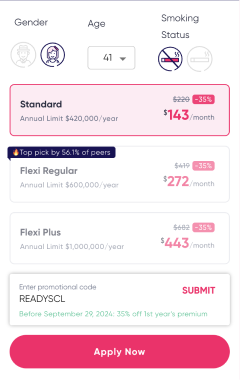
Benefit sub-limits vs full-cover structures: Basic VHIS Standard and entry Flexi tiers impose rigid caps on surgeon fees, anaesthetist fees, and operating theatre charges based on whether an operation is Major or Complex. In contrast, comprehensive high-end plans (such as Bowtie Pink) eliminate surgical category sub-limits, reimbursing eligible surgical, anaesthetic, and theatre costs in full up to the overall annual benefit limit.
Coverage for prescribed medical implants: Internal hardware used to stabilise fractures—such as titanium plates, screws, and artificial prosthetic joints—is formally categorised as designated or prescribed surgical implants. Standard VHIS policies restrict implant reimbursements to a fixed annual sub-limit (commonly HK$145,000 per policy year for designated implants), whereas full-coverage plans cover eligible prosthetic devices in full.
Treatment of unknown pre-existing conditions: Many older adults suffer from silent, undiagnosed osteoporosis prior to policy inception. Under VHIS statutory guidelines, unknown pre-existing conditions are covered on a graduated scale: 0% reimbursement in policy year 1, 25% in year 2, 50% in year 3, and 100% full eligible reimbursement from policy year 4 onwards. Premium medical policies may offer enhanced terms that reduce or waive this waiting progression.
Successfully managing a senior hip fracture requires families to navigate emergency hospital admission, pre-authorisation paperwork, and claims processing methodically to prevent administrative delays and unexpected out-of-pocket expenses. Following a clear, sequential checklist ensures that medical attention remains the central focus while insurance benefits are properly safeguarded:
Accurately document the accident context: Upon arriving at the hospital emergency room, ensure the circumstances of the fall are accurately documented in the triage records. If the elder slipped on a wet floor or tripped over a rug, explicitly state this physical accident. If the fall was preceded by dizziness, lightheadedness, or sudden loss of consciousness, report these symptoms truthfully. Accurate initial clinical notes are critical, as personal accident insurers scrutinise medical records to ensure no hidden cardiovascular or neurological trigger disqualifies an accidental injury claim.
Request an orthopaedic assessment and apply for pre-authorisation: If you elect to admit your family member to a private hospital, request an itemised budget estimate and the relevant diagnostic codes from the attending orthopaedic surgeon immediately. Submit these documents to your insurer to obtain a Guarantee of Payment (GOP) or medical pre-authorisation. Securing a GOP allows the insurer to settle eligible inpatient and surgical charges directly with the private hospital, preventing the family from having to put down large cash deposits (often HK$50,000 to HK$100,000) at admission.
Collect comprehensive discharge and clinical documentation: Before leaving the acute hospital ward, request all essential clinical paperwork from the medical records department. This file must include the attending physician’s formal medical report, the discharge summary detailing the exact surgical procedure name (e.g. “Left Hip Hemiarthroplasty” or “ORIF Left Femoral Intertrochanteric Fracture”), the anaesthetic record, diagnostic radiology imaging reports (X-rays and CT scans), and manufacturer specification stickers or certificates for all inserted implants.
Maintain an organised receipt trail for step-down rehabilitation: Post-operative recovery involves weeks of allied health consultations. Always secure a written doctor’s referral letter for physiotherapy and occupational therapy before attending step-down sessions, as both VHIS post-hospitalisation benefits and accident policies require medical referrals for allied health claims. Keep every original, itemised invoice detailing the practitioner’s registration number, treatment date, and clinical description to guarantee seamless reimbursement.
Yes, elderly individuals aged 70 or older can still obtain insurance protection in Hong Kong. Voluntary Health Insurance Scheme (VHIS) certified plans accept new applicants up to age 80, offering guaranteed lifetime renewal up to age 100, subject to individual medical underwriting regarding chronic health conditions. Furthermore, senior personal accident policies are widely available with entry ages extending up to 75 or 80, often featuring simplified health declarations that do not require intrusive medical examinations.
Yes, VHIS covers surgically inserted hardware—including dynamic hip screws, intramedullary nails, and artificial ceramic or metallic hip joints—under its designated or prescribed medical implant benefit. Basic Standard plans enforce a statutory benefit limit (such as HK$145,000 per policy year for designated implants), whereas comprehensive high-end plans, including Bowtie Pink, reimburse medically necessary eligible implants in full up to the policy’s overall annual limit.
If a fall is triggered by an internal medical condition such as a stroke, transient ischaemic attack, or postural hypotension, a personal accident policy will generally decline the claim because the incident was caused by illness rather than an external, violent accident. In contrast, VHIS medical insurance covers medically necessary hospitalisation, surgical repair, and post-operative ward care regardless of whether the fall was purely accidental or triggered by an underlying medical episode.
Following hip fracture surgery, acute inpatient hospitalisation typically lasts between 5 and 10 days to monitor wound healing, manage pain, and prevent deep vein thrombosis. Many elderly patients then spend an additional 2 to 4 weeks in a convalescent rehabilitation ward or step-down facility. Resuming assisted walking with a frame or crutches generally requires 6 to 12 weeks, whilst regaining optimal mobility and functional independence can take between 6 months and a full year of consistent physiotherapy.
Families unable to afford private hospital surgery can rely on Hong Kong’s heavily subsidised public healthcare system under the Hospital Authority. Under the revised public hospital fee structure effective 1 January 2026, eligible Hong Kong residents are protected by an annual healthcare spending cap of HK$10,000 covering all inpatient acute, convalescent, and outpatient services. Low-income or vulnerable elderly households can additionally apply for Medical Fee Waivers or assistance from the Samaritan Fund and Community Care Fund through hospital medical social workers.

© 2026 Bowtie Life Insurance Company Limited. All rights reserved.