Insurance
Insurance
Amateur Sports Competition Insurance in Hong Kong: Tournament Injury Coverage Explained
Author
Bowtie Team
Updated on
2026-09-05
Participating in amateur leagues, annual corporate cups, and public endurance races is a regular highlight for thousands of sports enthusiasts across Hong Kong. However, the high-intensity nature of competitive sports brings a heightened risk of acute physical trauma, ranging from sudden ligament ruptures and joint dislocations to bone fractures and concussions. While many competitors maintain standard private hospitalisation insurance, such policies often leave substantial financial gaps for outpatient emergency treatment, diagnostic imaging, and post-match physical rehabilitation.

Amateur sports tournament coverage is designed to protect non-professional athletes against unexpected medical expenses, surgical procedures, and ongoing physical therapy resulting directly from competitive sporting accidents. Unlike routine training sessions, official competitions present an elevated risk profile due to intense physical collisions, competitive fatigue, and unpredictable match conditions. According to public health surveys published by the Department of Health, sprains, falls, and sports-related incidents constitute some of the leading causes of unintentional injuries among active individuals in Hong Kong.
Many competitors assume that an existing Voluntary Health Insurance Scheme (VHIS) plan or basic corporate medical benefit provides exhaustive coverage for any match day mishap. In practice, traditional hospitalisation insurance is primarily structured to reimburse inpatient room accommodation, specialist fees, and hospital surgical operations. If an athlete suffers an acute ankle sprain, a minor muscle tear, or a contusion that requires immediate Accident and Emergency (A&E) consultation followed by multiple weeks of physiotherapy or Chinese bone-setting (dit da), standard medical policies often exclude these outpatient treatments or impose strict sub-limits.
Dedicated amateur sports accident protection bridges this exact gap. By reimbursing acute outpatient treatment, specialised diagnostic investigations such as Magnetic Resonance Imaging (MRI), day case surgical interventions, and structured rehabilitative care, tournament-ready accident insurance ensures athletes can focus on rehabilitation without absorbing substantial out-of-pocket expenses.
Underwriting classifications draw a strict legal boundary between amateur participants and professional athletes based on compensation, contractual obligations, and sporting livelihood. Standard personal accident policies and consumer sports insurance plans in Hong Kong are strictly calibrated for amateur risks; attempting to claim under amateur terms while operating as a compensated sporting professional can lead to immediate policy voidance and claim repudiation.
|
Athlete Classification |
Financial Remuneration & Contractual Status |
Typical Competition Formats |
Insurance Eligibility |
|---|---|---|---|
|
Amateur Athlete |
Participates purely for recreation, health, or fitness; receives no salary, appearance fees, or performance retainers |
Corporate sports tournaments, community football leagues, public marathons, inter-school alumni cups |
Fully eligible under standard personal accident and amateur sports competition policies |
|
Semi-Professional Athlete |
Receives token training stipends, transport allowances, or non-livelihood club subsidies |
Subsidised club divisions, national age-group squads, open district invitationals |
Conditional eligibility; financial allowances must be declared to underwriters prior to competition |
|
Professional Athlete |
Competes as a primary career or commercial enterprise; bound by salaried contracts or major prize purses |
Professional league circuits, national team international fixtures, high-stakes commercial tours |
Excluded from standard personal accident plans; requires specialised commercial athlete coverage |
Insurers recognise that winning nominal trophies, finisher medals, or token supermarket vouchers does not alter an athlete’s amateur standing. However, if participation forms part of a commercial endorsement contract or generates a primary livelihood, the activity falls squarely outside retail personal accident underwriting.
When evaluating insurance protection for an upcoming tournament, amateur competitors should verify that their policy incorporates the following vital benefit categories:
Outpatient Medical Expense Reimbursement: Immediate reimbursement for emergency consultations at public hospital A&E departments or private outpatient clinics, prescription medications, wound dressings, and essential diagnostic scans such as X-rays, Computed Tomography (CT), and MRI scans to assess acute joint or ligament trauma.
Physical Rehabilitation Therapy: Comprehensive follow-up care covering registered physiotherapy, chiropractic adjustments, and registered Chinese medicine bone-setting (dit da) within designated per-visit and annual benefit limits.
Inpatient and Day Case Surgical Benefits: Coverage for major trauma requiring hospitalisation or day surgery, including arthroscopic anterior cruciate ligament (ACL) reconstruction, meniscal repair, tendon suture, or open reduction and internal fixation (ORIF) of complex fractures.
Accidental Death and Disablement (AD&D): Lump-sum capital payouts to provide long-term financial security in the tragic event of permanent total disablement, loss of limbs, sight, or accidental death.
Acute Exertional Medical Emergencies: Protection against life-threatening, exercise-induced physiological emergencies sustained during high-intensity endurance events, such as severe heat exhaustion, heat stroke, or sudden cardiac arrest.
Third-Party Personal Liability: Protection against legal defence fees and court-awarded damages if a competitor’s accidental on-field actions inadvertently cause bodily injury to a fellow competitor, match official, or spectator, or result in third-party property damage.
Insurers enforce specific event qualification criteria to ensure that a tournament is legitimate, supervised, and conducted under recognised safety protocols before approving injury claims:
Recognised Organiser Credentials: The competition must be officially organised or sanctioned by a registered body, such as a National Sports Association (NSA), the Leisure and Cultural Services Department (LCSD), educational institutions, corporate sports associations, or registered event management entities. Spontaneous, unsupervised pickup matches in public parks generally do not meet this standard.
Designated Venues and Marked Courses: Matches must take place in approved sporting facilities—such as LCSD sports centres, accredited artificial turf pitches, public tracks, or police-approved, officially marshalled road and trail routes.
On-Site Safety and Medical Provisions: Standard tournament regulations generally require dedicated first-aid stations, qualified paramedics, or emergency response personnel to be stationed on site to log incidents and provide immediate triage.
Geographical Scope: Basic domestic accident policies protect participants within Hong Kong. Athletes travelling overseas for events, such as the Tokyo Marathon or regional football friendlies, must ensure their policy includes worldwide territorial coverage or secure an overseas extension.
Altitude and Weather Restrictions: Endurance trail runs and mountain races must comply with stipulated altitude limits (typically below 2,000 or 3,000 metres above sea level) and adhere strictly to Hong Kong Observatory weather warnings, including Black Rainstorm or Typhoon Signal No. 8 protocols.
Amateur athletes in Hong Kong generally choose between an annual standalone Personal Accident (PA) policy offering continuous 24/7 protection and a specialist sports insurance policy designed specifically for athletic events.
|
Comparison Feature |
Standalone Personal Accident Insurance (e.g. Bowtie Touch Wood Protector) |
Specialist Sports Insurance (e.g. Company B / Company Z Sports Plans) |
|---|---|---|
|
Scope of Coverage |
Continuous 24/7 protection covering everyday life, work commute, domestic accidents, and amateur sports |
Active only during declared sporting events, official training sessions, or specified competition windows |
|
Annual Medical Limit |
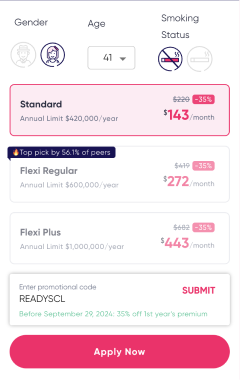
Substantial annual limits (e.g. up to HK$420,000 per policy year) reimbursing actual medical and surgical expenses |
Moderate per-incident limits specifically allocated for acute sporting injuries, often with lower overall caps |
|
Rehabilitation Coverage |
Broad coverage for registered physiotherapy, chiropractic treatments, and Chinese bone-setting within annual caps |
Often focuses on physiotherapy per-visit allowances; Chinese bone-setting may be excluded or restricted |
|
Sports-Specific Add-Ons |
Focused strictly on medical reimbursement and accidental disability; no gear or registration fee cover |
Supplementary covers available for damaged sports equipment, tournament fee cancellation, and sports liability |
|
Tenure & Administrative Ease |
Continuous annual policy renewing automatically; eliminates the hassle of purchasing individual event passes |
Flexible single-day passes, multi-day competition passes, or seasonal sports bundles |
|
Territorial Validity |
Typically includes worldwide protection for accidental medical treatment |
Often restricted to Hong Kong unless an overseas travel or competition rider is added |
For competitors participating regularly in weekend leagues, social tournaments, and regular training throughout the year, an annual personal accident policy provides seamless, administrative-free coverage across both athletic and daily activities. Conversely, an athlete seeking a one-off policy with cover for expensive sporting equipment or registration fee refunds may consider event-specific sports products.
While amateur tournament insurance delivers essential financial protection, insurers maintain strict exclusion clauses to limit excessive or unquantifiable liabilities:
Professional and Commercial Sports: Participation in events where the insured competes as a registered professional, receives commercial prize purses, or earns a livelihood through sporting contracts.
Unsanctioned Hazardous Activities: High-risk pursuits such as motor racing, mountaineering requiring crampons or ice axes, combat fighting with prize money, or deep-sea scuba diving beyond recreational depths, unless covered under specific policy riders.
Pre-Existing Musculoskeletal Conditions: Chronic joint wear, recurring ligament instability, or historical overuse injuries sustained before policy inception.
Willful Misconduct and Rule Infringements: Injuries resulting from deliberate fouls, physical brawling, retaliation, or participating under the influence of narcotics or alcohol.
Informal and Pickup Games: Spontaneous, informal matches conducted without official organisation, formal participant rosters, or emergency medical support.
Following a clear documentation and submission protocol immediately following an on-field injury ensures a smooth claims assessment without preventable administrative delays:
Seek Prompt Medical Attention: Attend a Hospital Authority A&E department, a private hospital outpatient clinic, or a registered Western medical practitioner within 24 to 48 hours of the accident. Under Hong Kong’s public healthcare charging structure, eligible persons pay HK$400 for urgent or semi-urgent A&E attendances, with charges fully waived for critical or emergency triage cases.
Obtain an Official Medical Certificate: Request a formal consultation certificate or sick leave document specifying the exact date, clinical mechanism of injury, and precise diagnostic evaluation (such as a complete anterior cruciate ligament tear or acute lateral ankle sprain).
Secure a Written Physiotherapy Referral: Under regulatory guidelines established by the Physiotherapists Board of Hong Kong, insurance claims for physiotherapy generally require a written referral letter issued by a registered Western medical practitioner. Ensure this referral is dated prior to initiating therapy.
Compile Complete Evidentiary Records: Gather all original itemised medical invoices, pharmacy receipts, diagnostic imaging reports (MRI, CT, or X-ray), and evidence of competition entry (such as your event bib, official match sheet, or registration confirmation).
Submit Claim Documentation Promptly: Complete the insurer’s formal claim form and upload all supporting materials through the digital customer portal or post them within the stipulated deadline (commonly within 30 days from the treatment completion date).
Yes, comprehensive personal accident insurance policies in Hong Kong generally cover amateur sports competitions, including public marathons, charity runs, and weekend football leagues. As long as the tournament is officially organised, does not involve professional prize-fighting or hazardous motor racing, and the insured participates as a non-professional, accidental injury medical expenses are covered.
No, claiming will not be rejected solely because a participant receives a medal, trophy, or nominal amateur prize money. Insurers distinguish between non-professional sporting accolades and professional athletic earnings. Policy exclusions apply only when a competitor participates as a salaried sporting professional, receives commercial appearance fees, or relies on prize purses as a primary livelihood.
Yes, policies such as Bowtie Touch Wood Protector provide coverage for registered physiotherapy, chiropractic treatment, and registered Chinese medicine bone-setting (dit da) resulting from an accidental sporting injury. To satisfy claims requirements, treatments must adhere to policy per-visit sub-limits, and physiotherapy generally requires an official written referral from a registered Western medical practitioner.
Coverage for overseas competitions depends entirely on the territorial scope of your policy. Standalone personal accident plans with worldwide medical provisions cover accidental injuries sustained during amateur sports abroad. In contrast, basic local sports insurance plans often restrict cover to the Hong Kong Special Administrative Region unless an overseas extension is explicitly purchased.
Personal liability coverage protects athletes against financial liability if their accidental actions on the field cause bodily injury to another player or damage third-party property during an organised match. While contact sports inevitably involve physical risks, liability protection covers legal defence costs and court settlements if an accidental incident leads to civil litigation.

© 2026 Bowtie Life Insurance Company Limited. All rights reserved.