Hospitalization insurance: Introduction & 6 key features
What is Hospitalization Insurance (Inpatient Medical insurance)?
Hospitalization insurance , sometimes called Inpatient Medical insurance, is a type ofpolicy that primarily covers medical and surgical expenses incurred during hospitalization , as well as some non-hospitalization surgical expenses , allowing the insurance company to share your medical costs.
Some plans also include Supplemental Medical Coverage (SMM) , which provides a percentage-based reimbursement for medical expenses exceeding the coverage limit.
In Hong Kong, the mainstream medical insurance product is currently the Voluntary Health Insurance, which is also a type of hospitalization insurance. The difference is that all Voluntary Health Insurance products must be approved by the Government’s Health and Medical Services Bureau before they can be launched on the market. This means that all Voluntary Health Insurance products on the market must meet or exceed the 11 minimum requirements set by the Health and Medical Services Bureau . Furthermore, eligible premiums for Voluntary Health Insurance are eligible for tax deductions, which is also a unique advantage.
The most important thing when buying voluntary health insurance is to make a claim!
Compared to its peers, Bowtie’s claims figures are by no means inferior. Taking Bowtie’s Voluntary Health Insurance as an example, the successful claim approval rate is 98.3%*, which is higher than the overall Voluntary Health Insurance claims success rate of 92% to 96% in Hong Kong from April 2019 to the end of 2023 (data source: Legislative Council documents).
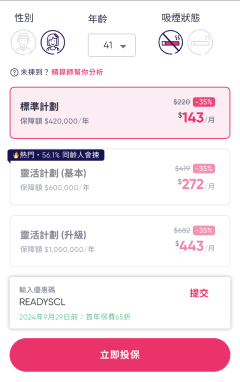
Bowtie offers a variety of voluntary health insurance plans, including the Standard Plan , Flexible Plan – Basic , Flexible Plan – Upgrade , and Bowtie Pink , to meet the needs of different customers. Each plan has its own features and advantages, and it is recommended to compare them carefully before making a choice.
*The above figures represent the average percentage of approved claims for Bowtie Voluntary Health Insurance’s Standard Plan, Flexible Plan – Basic, Flexible Plan – Upgrade, and Bowtie Pink plans as of February 2025.
Six Features of Hospitalization Insurance
1. Compensation will be reimbursed based on actual expenses incurred.
Medical insurance reimburses on an ” actual cost ” basis. The insurance company will process the claim according to the items and reimbursement limits specified in the Benefit Schedule. You can only get back the full amount of medical expenses, but you will not “earn” any additional cash compensation or allowance.
2. Annual renewal
Medical insurance requires annual renewal . Insurance companies consider the insured’s or the entire risk pool’s past claims history when deciding whether to renew . Therefore, when purchasing insurance, pay attention to whether the plan offers a “guaranteed lifetime renewal” clause. If the insurance company does not renew and you need to reapply, you may face higher premiums or be refused coverage if your health condition has unfortunately changed. Voluntary medical insurance , on the other hand , guarantees lifetime renewal until age 100 .
3. An annual compensation limit is set
Traditional medical insurance typically calculates coverage based on a ” limit per injury or illness “. Taking cancer as an example, if the coverage limit for each injury or illness is exhausted due to cancer, even if the cancer is not cured and treatment is required for many more years, the medical expenses will no longer be reimbursed because the coverage limit for the same injury or illness has already been exhausted.
Until recently, medical insurance , including voluntary health insurance , adopted a compensation mechanism based on ” compensation limits per policy year ,” significantly improving the effectiveness of coverage for long-term illnesses. In other words, even if the coverage amount is exceeded in this year’s claim, it will “revive” in the next policy year. At that time, if you file a claim for the same injury or illness again, you will still receive compensation.
Taking Bowtie’s Voluntary Health Insurance series as an example, the annual coverage limits for different plans are as follows:
| Bowtie Voluntary Health Insurance | Annual coverage |
| Standard Plan | $420,000 |
| Flexible planning (basic) | $600,000 |
| Flexible Plan (Upgrade) | $1 million |
| Bowtie Pink (Standard Room) | $8 million |
| Bowtie Pink (Semi-private room) | $10 million |
| Bowtie Pink (Private Room) | $20 million |
4. Geographical restrictions
When purchasing insurance, pay attention to the geographical coverage , such as Asia, global (excluding the United States), or global coverage .
In addition, you must fill in your place of residence when applying for insurance. If you need to leave your place of residence for an extended period due to immigration or business, you must declare this to the insurance company. The insurance company will assess your new place of residence and may require additional premiums, reduce coverage, or even terminate the policy.
Taking Bowtie’s Voluntary Health Insurance series as an example, the coverage areas for different plans are as follows:
| Bowtie Voluntary Health Insurance | Coverage area |
| Standard Plan | Global (Psychiatric treatment, rehabilitation treatment, and medical negligence protection are limited to Hong Kong only) |
| Flexible planning (basic) | |
| Flexible Plan (Upgrade) | |
| Bowtie Pink (Standard Room) | Global (excluding the US) (Except for hospitals in the United States and those not on the designated list in China ; psychiatric treatment is limited to Hong Kong.) |
| Bowtie Pink (Semi-private room) | |
| Bowtie Pink (Private Room) |
5. Alternatively, establish a joint insurance/deposit fee
Both “mutual insurance” and “deductible” (also known as out-of-pocket expenses) are costs that you need to bear yourself.
When the insured makes a claim to the insurance company, a certain amount (or a certain percentage of the compensation amount) needs to be shared or paid in advance , and the insurance company will reimburse the remaining amount.
Co-insurance often appears within specific coverage items of a policy, while the deductible can be selected according to your individual needs. Generally speaking, the higher the deductible, the lower the premium.
Bowtie’s Voluntary Health Insurance also includes examples of co-insurance and out-of-pocket payments:
- Co-insurance: Bowtie Voluntary Health Insurance Standard and Flexible plans offer 30% co-insurance for Specified Diagnostic Imaging Tests; while Bowtie Voluntary Health Insurance Flexible plans offer 20% co-insurance for Supplemental Medical Coverage (SMM).
- Out-of-pocket expenses: Bowtie Pink Voluntary Health Insurance offers four out-of-pocket expense options: $0, $20,000, $50,000, and $80,000. Policyholders can choose freely according to their personal needs.
6. Premiums typically increase with age
Medical insurance premiums increase with age , and insurance companies also adjust premiums based on factors such as medical data, claims, and operational status.
Choose Bowtie: Save up to 35% on your insurance premiums annually
Medical insurance premiums are a long-term expense, so policyholders should pay attention to long-term premium levels. While many insurance companies offer first-year premium discounts or other short-term reductions, some even as low as 10% of the first-year premium, policyholders should not be solely attracted by these offers. Instead, they should compare the long-term premium levels of different insurance companies and assess their own ability to afford the premiums over the long term before making a purchase decision.
To facilitate comparison, Bowtie has compiled standard and flexible plans from insurance companies in the market for your reference:
Bowtie helps you save average expenses every year.
- Bowtie Flexible Plan (Regular): 35%
- Bowtie Standard Plan: 27%
- Bowtie Pink (Semi-private): 22%
- 1The premium comparison data above is based on market research conducted on December 29, 2025, using publicly available information. It covers similar voluntary health insurance plans at the standard room level with "Additional Medical Coverage" and "Room and Meal" limits of $800–$1200, and calculates the standard annual premium for a non-smoking male aged 30 to 45. The coverage and amount of coverage vary between different health insurance plans; please refer to the relevant policies, terms, and conditions for details.2. The premium comparison data above is based on market research conducted on December 29, 2025, using publicly available information, and covers premiums for standard voluntary health insurance plans in the market. Premiums for other insurance companies are calculated based on annual premiums, using a non-smoking male aged 30-45 as an example. Please refer to the relevant policies, terms, and conditions for details.3. The above premium comparison data is based on market research conducted on December 29, 2025, using publicly available information. It covers similar medical insurance plans at the semi-private home level with a deductible option of HK$0, and is calculated based on the basic premium for non-smoking males aged 30-45. The coverage and amount of coverage vary among different medical insurance plans; please refer to the relevant policies, terms, and conditions for details.
