Understanding VHIS Underwriting Principles and Results
The importance of insurance is self-evident, especially medical insurance, which provides us with essential protection. However, many people try to save money by thinking they can buy insurance only when needed, but when health issues arise or problems are discovered during check-ups, it’s often too late to regret.
At this point, you might wonder: Can I still buy insurance if I’m already ill? This question isn’t straightforward, as it depends on the specific disease and individual circumstances. Here, you need to first understand the insurance company’s Underwriting principles and the various outcomes that may follow underwriting. Additionally, we’ll share insights on the most common diseases people worry about regarding insurability to help you fully grasp the process!
Want to Buy Insurance? Get Past Underwriting!
Before purchasing any insurance, the insurance company will underwrite each insured person by asking questions to assess their health and lifestyle habits (such as smoking and drinking). At this stage, the policyholder has a responsibility to adhere to the principle of utmost good faith during Underwriting , fully and accurately disclosing personal health conditions, medical history, and other details to minimize potential disputes during future claims.
The principle of utmost good faith means that regardless of whether the insurance company asks for specific information, the policyholder must proactively disclose all material facts—any circumstances that could affect a prudent insurer’s decision on premiums or risk acceptance.
During the underwriting process, the insurance company will evaluate the risk based on the provided information to decide whether to accept the application or add extra terms to the policy before approval.
4 Possible Outcomes After Underwriting
When the insurance company conducts underwriting, it will assess the risk level based on the applicant’s situation and make one of the following decisions:
1. Successfully Insured at Standard Premium
If the applicant’s risk level is ideal, such as having mild symptoms or good recovery, they may be successfully insured at the standard premium.
2. Successfully Insured, but with Loading or Exclusions
Based on the applicant’s condition (such as the type of illness or presence of complications), the insurance company may Loading / Exclusions .
3. Successfully Insured, but with Both Loading and Exclusions
Furthermore, if the applicant’s condition is not ideal (such as undergoing treatment for complications), the insurance company may impose both additional premiums and exclusions.
4. Direct Rejection
Finally, if the insurance company deems the applicant’s risk level too high, it will opt for direct rejection.
Which Diseases Allow You to Buy Insurance and Which Don't?
Bowtie is always committed to helping everyone find insurance that suits them. Therefore, based on the most searched diseases online for “whether you can buy insurance or not,” and using voluntary health insurance as an example, we help you understand if patients can successfully get underwritten:
Common Childhood Diseases (e.g., ADHD)
Currently, most insurance companies on the market do not accept children with ADHD for medical insurance, as ADHD is caused by brain development and nervous system issues. Insurance companies generally believe that such individuals have too many uncertainties, leading to higher risks, so they refuse coverage.
However, Bowtie deeply understands the importance of medical insurance for children with ADHD, so we generally accept their applications with no age restrictions, only adding an extra 50% premium to cover hospitalization or day surgery costs arising from illnesses or accidents.
Immediately see ADHD’s underwriting requirements
Tumors (e.g., Fibroadenoma)
Fibroadenoma is a common breast lump that usually does not increase the risk of breast cancer. However, if a patient has complex fibroadenoma or phyllodes tumor, the breast cancer risk may slightly increase. For fibroadenoma treatment and related examinations, Bowtie covers the relevant costs under all levels of voluntary health insurance.
Immediately see fibroadenoma’s underwriting requirements
Chronic Diseases/Conditions
1. Diabetes
Diabetes is a common chronic disease with no complete cure and can lead to various complications. Therefore, even if diabetic patients can successfully get insured, insurance companies will add extra premiums and/or exclusions based on the applicant’s condition, and severe cases may be rejected.
Immediately see diabetes’ underwriting requirements
2. High Blood Pressure
In general, people with high blood pressure can get insured at standard premiums, but since everyone’s health condition varies, insurance companies may increase premiums and/or add exclusions based on blood pressure control, treatment type, or presence of complications, and in some cases, reject coverage.
Immediately see high blood pressure’s underwriting requirements
Severe Diseases/Conditions
1. Stroke
Due to the high likelihood of complications in stroke patients, if they want to buy medical or critical illness insurance, insurance companies typically consider the risk too high and directly reject coverage. Even if they have fully recovered, the decision remains the same.
However, since stroke patients face various life risks, such as a high recurrence rate or accidents due to mobility issues, they still need life insurance, accident insurance, or cancer insurance, and insurance companies generally accept stroke patients for these.
Immediately see stroke’s underwriting requirements
2. Heart Disease
Heart disease is a general term for all heart-related conditions, and different types encounter varying situations during underwriting. If a patient has severe heart diseases such as coronary heart disease, myocardial infarction, or heart failure*, insurance companies generally reject coverage due to high risks (e.g., potential complications).
If a patient has a milder heart disease like myocarditis*, insurance companies may not directly reject but will ask a series of health-related questions to determine the underwriting outcome.
*This classification is for explaining insurance companies’ decisions in the underwriting process and is not defined by the medical community.
Immediately see heart disease’s underwriting requirements
3. Cancer
It is quite difficult for cancer patients to successfully purchase medical insurance afterward, as insurance companies consider factors like the risk of cancer recurrence, the affected organ, cancer stage, pathological classification, and treatment duration, with cancer stage and treatment duration having the most impact on policy approval.
Immediately see cancer’s underwriting requirements
Not all situations allow you to buy insurance; you can only be guaranteed coverage when you are in good health and have no suspicious symptoms!
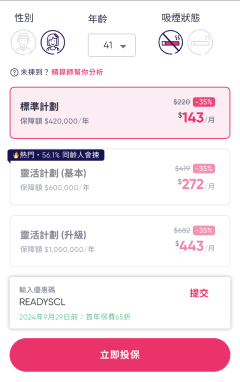
Take advantage of your good health and no suspicious symptoms to get insured as soon as possible! Use the premium calculator right away to calculate your monthly premium:
⭐️ Voluntary Health Insurance + Critical Illness Insurance: Why Both Are Essential?
First, everyone needs to understand that the functions of medical insurance and critical illness insurance are different:
- Medical insurance: Provides reimbursement on a reimbursement basis for eligible medical expenses
- Critical illness insurance: Provides a lump-sum payment if the insured unfortunately suffers from a specified serious illness, to cover living expenses during the period of absence from work, allowing the insured to focus on treatment and recovery
Therefore, if you unfortunately suffer from a critical illness, having only medical insurance may cover your medical expenses but might not address the long-term issues you face due to the illness. In fact, when you are diagnosed with a critical illness, even if it is not life-threatening, it often forces you to stop working and lose income, which can affect your quality of life and disrupt your existing plans.
Since the coverage of medical insurance and critical illness insurance do not overlap, a reliable critical illness insurance can replace the income you lose while out of work, providing financial support and reducing the impact on your family, thereby maintaining your original quality of life.
Moreover, even if you cannot purchase new insurance after falling ill, the critical illness payout can help you continue paying for your existing medical insurance premiums when necessary.
Critical illness insurance is absolutely an important form of protection. In addition to medical insurance, the importance of critical illness insurance cannot be overlooked. In any situation, as long as you have a stable income, you should actively consider purchasing a critical illness policy to provide an extra layer of protection.
Frequently Asked Questions
Policyholders do not need to declare all diseases, as certain health conditions or treatments will not affect the underwriting results , including:
Common cold / flu / sore throat, gastroenteritis / food poisoning (fully recovered), indigestion (no examination needed), acne, muscle strain (fully recovered), thrush, routine prenatal scans / blood tests (normal results), routine cervical smear tests (normal results), routine health check-ups (normal results), preventive vaccines, hormone replacement therapy (menopause), infertility treatment or normal fetal growth during pregnancy, nearsightedness / farsightedness / astigmatism / presbyopia.
Bowtie’s online underwriting process consists of 95% multiple-choice questions and provides clear instructions, so the insured only needs to answer yes or no, making the process very convenient. Other insurance companies conduct underwriting through intermediaries, who also provide clear guidance to assist policyholders.
All insurance companies’ underwriting processes will ask about the policyholder’s family medical history , as medical research shows that family history can increase the risk of certain diseases. Therefore, policyholders need to declare specified medical histories of immediate family members (including biological parents or siblings) before the age of 60 , which may affect the underwriting results.
