Does Accident Insurance Cover Yoga Instructors in Hong Kong?
Learn how personal accident insurance protects yoga instructors in Hong Kong. Compare studio liability versus personal coverage, treatment costs, and key policy terms.
For yoga instructors in Hong Kong, physical health and joint mobility represent their primary income-generating assets. However, because the vast majority of yoga and Pilates teachers operate as freelancers, guest instructors, or independent studio contractors, they fall outside standard statutory employment protections. A sudden slip on a polished hardwood floor, a hyperextended wrist while demonstrating an advanced arm balance, or an acute muscle tear during a hands-on adjustment can immediately halt their teaching schedule and eliminate their cash flow. Personal accident insurance serves as a vital financial safety net, reimbursing prompt private medical diagnostics, orthopaedic consultations, and rehabilitative therapies so instructors can safely return to the mat.

Why Yoga Instructors Need Dedicated Personal Accident Insurance in Hong Kong
Yoga instructors require dedicated personal accident insurance because their physical mobility directly dictates their earning capacity, while their employment structure leaves them without statutory workplace protection. When an instructor suffers an acute musculoskeletal injury, they cannot deliver classes, offer physical hands-on adjustments, or demonstrate postural alignments. Unlike corporate desk professionals who can frequently continue working remotely with a fractured wrist or a torn knee ligament, an injured movement teacher faces an instantaneous suspension of billable hours and personal revenue.
Furthermore, the employment landscape of Hong Kong fitness and wellness studios heavily relies on freelance contracts. Under Hong Kong’s Employees’ Compensation Ordinance (Cap. 282), commercial studio operators are legally obligated to provide employees’ compensation insurance only for individuals engaged under a formal contract of service. Freelance teachers, visiting master instructors, and independent class contractors operate under a contract for service, meaning studios have no statutory duty to finance their medical expenses, provide paid sick leave, or compensate them for temporary work disablement.
Without an individual accident policy, an injured freelance instructor must independently fund private outpatient care or endure lengthy waiting times in the public healthcare system. Independent personal accident insurance bridges this vulnerability by providing direct financial reimbursement for accidental medical expenses, allowing instructors to access prompt private treatment and preserve their professional livelihood.
Common Yoga Teaching Injuries and Private Healthcare Costs in Hong Kong
While yoga is widely celebrated for its low-impact conditioning and mindfulness benefits, teaching multi-level classes daily exposes instructors to acute traumatic risks. Instructors must distinguish between non-covered gradual wear-and-tear conditions and acute accidental injuries. Personal accident policies specifically indemnify sudden, unforeseen, and violent external events—such as acute hamstring tendon avulsions during dynamic forward folding, acute meniscus or labral tears sustained while assisting a heavy student, wrist hyperextension sprains from slipping in arm balances, or falling on sweat-slick studio floors.
When acute trauma strikes, seeking prompt diagnosis and rehabilitation in Hong Kong’s private medical sector is essential to avoid long-term mobility impairment. Although the public Hospital Authority network provides subsidised emergency care, queuing times for public specialist orthopaedic outpatient clinics and non-urgent MRI scans often span several months to over a year. Consequently, full-time movement instructors almost invariably rely on private clinics to expedite recovery.
The table below illustrates common acute yoga teaching injuries, standard clinical interventions, and prevailing medical costs across Hong Kong:
|
Injury Type |
Acute Scenario |
Typical Medical Procedures in Hong Kong |
Estimated Private Cost (HKD) |
|
Acute Meniscus or Ligament Tear |
Twisting knee suddenly while manually adjusting a student in Warrior pose |
Specialist orthopaedic consultation, diagnostic knee MRI scan, knee brace fitting |
HK$7,000 – HK$15,000 (Consultation & MRI) |
|
Hamstring Origin Avulsion / Severe Tear |
Explosive muscular strain or slip during deep hip extension demonstration |
Orthopaedic assessment, soft tissue ultrasound or MRI, targeted clinical rehabilitation |
HK$8,000 – HK$16,000 (Diagnostics & initial care) |
|
Wrist Hyperextension & Ligament Sprain |
Loss of balance during an arm balance demonstration (e.g. Bakasana / Handstand) |
Urgent X-ray imaging, wrist immobilisation splint, specialist consultation |
HK$3,000 – HK$6,500 |
|
Outpatient Physiotherapy Rehabilitation |
Post-acute mobility restoration, manual therapy, and neuromuscular re-education |
Course of 6 to 10 private registered physiotherapy sessions |
HK$950 – HK$1,300 per session (HK$5,700 – HK$13,000 total) |
|
Traditional Chinese Bone-Setting (跌打) |
Soft tissue contusions, joint sprains, and acute haematoma management |
Registered Chinese Medicine Practitioner consultation, herbal poultice, bone manipulation |
HK$350 – HK$600 per visit (HK$2,100 – HK$4,200 for 6 visits) |
|
Hospital Authority Accident & Emergency |
Immediate emergency triage at a public hospital A&E department |
Clinical evaluation, emergency reduction, basic emergency X-ray imaging |
HK$400 per attendance (adjusted under HA fee reform; Category I & II exempt) |
For an independent instructor earning class-by-class fees, absorbing HK$15,000 to HK$30,000 out of pocket for comprehensive diagnostic imaging and follow-up physiotherapy represents a severe financial drain, reinforcing the importance of an actual-reimbursement accident policy.
Studio Insurance vs Personal Accident Insurance: Clarifying the Protection Gap
A pervasive misconception among yoga instructors is that teaching inside an established boutique studio, hotel wellness centre, or commercial gymnasium automatically shields them against injury costs. In reality, commercial studio insurance arrangements are designed to protect the business entity and its owners, leaving freelance and contractor instructors largely unprotected.
Commercial fitness venues typically maintain two main corporate insurance policies: Public Liability (PL) insurance and Employees’ Compensation (EC) insurance. Public Liability insurance indemnifies the studio against third-party civil claims; for instance, if a paying student trips over a loose yoga prop or sustains an injury due to faulty studio facilities and sues the management. A hired instructor is generally treated as an operational party rather than a third party, and this policy offers zero medical expense reimbursement for the teacher’s own injuries.
Similarly, the studio’s Employees’ Compensation policy strictly protects staff members hired under statutory employment contracts. If you invoice the studio as a sole proprietor or receive remuneration on a per-class freelance basis without statutory benefits (such as Mandatory Provident Fund contributions paid by the studio as an employer), you cannot claim against the venue’s labour insurance policy.
The following comparison highlights how commercial studio policies differ from an instructor-owned personal accident plan:
|
Coverage Feature |
Studio Public Liability Insurance |
Studio Employees’ Compensation |
Personal Accident Insurance (Instructor-Owned) |
|
Primary Beneficiary |
Studio business entity and third-party public/students |
Legally registered full-time and part-time employees |
The individual yoga instructor |
|
Reimbursement for Instructor’s Medical Bills |
None |
Covered only if on formal payroll with an employment contract |
Full reimbursement up to policy limits regardless of fault |
|
Covers Freelance / Contractor Instructors? |
No |
No (statutorily excluded under contract for service) |
Yes, full individual coverage |
|
Rehabilitation Coverage (Physio / Bone-Setting) |
None |
Statutory medical limits only for verified employees |
Direct reimbursement subject to daily and annual policy caps |
|
Portability Across Studios & Venues |
Limited to the specific studio premises |
Limited to the employer’s designated business locations |
24/7 coverage anywhere (studios, parks, home, overseas) |
Carrying an individual personal accident policy ensures that an instructor remains covered irrespective of whether an accident happens in a boutique Central studio, an outdoor community class in Tamar Park, or a client’s private residence.
Key Coverage Features to Look for in a Personal Accident Policy
When selecting personal accident insurance, yoga instructors must evaluate policy wordings carefully to ensure the plan accommodates the physical nature of movement professions. Essential features to consider include:
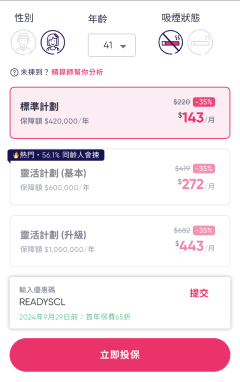
- High Medical Expense Limits per Accident: Ensure the policy reimburses medical expenses on an actual-cost basis with a generous overall limit. Comprehensive digital plans, such as Bowtie Touch Wood Protector, offer medical expense coverage of up to HK$420,000 per policy year, providing ample headroom for private specialist evaluations, advanced diagnostic radiology, and subsequent therapeutic treatments.
- Outpatient Rehabilitation Sub-Limits: Rehabilitation represents the highest cumulative expense following a musculoskeletal injury. Scrutinise sub-limits for registered physiotherapy, chiropractic treatments, and traditional Chinese bone-setting (跌打). Look for policies that provide realistic daily consultation allowances (e.g. HK$500 to HK$1,000 per visit) and allow a sensible number of visits per injury or per policy year.
- Doctor’s Referral Flexibility: Many traditional accident policies require a written referral letter from a registered Western medical doctor before reimbursing physiotherapy or chiropractic care. Verify the referral rules: some modern digital insurers permit direct claims or allow a reasonable grace period (e.g. obtaining a referral within a set window of the injury) to streamline the claims journey.
- Worldwide 24/7 Protection: Hong Kong yoga instructors frequently travel to lead international retreats in destinations like Bali, Thailand, or Japan, or attend overseas teacher training intensives. A robust policy must offer continuous 24-hour worldwide coverage for accidental injuries sustained abroad without geographical restrictions.
- Lump-Sum Disablement and Accidental Death Benefits: In the unfortunate event of a catastrophic accident causing permanent total disablement (such as permanent paralysis) or permanent partial disablement (such as the loss of sight or limb function), the policy should pay a lump-sum cash compensation. This capital serves as an indispensable financial cushion while undergoing long-term career retraining.
Underwriting Caveats: Occupational Classes, Forms of Yoga, and Exclusions
Personal accident policies determine eligibility and premium rates using occupational risk classifications. Understanding these underwriting frameworks prevents claim disputes:
- Occupational Risk Classification (Class 2): Underwriters group occupations into hazard tiers based on manual labour and exposure to physical danger. Desk-bound professionals sit in Class 1. Yoga instructors operating in conventional studio settings, wellness centres, or fitness facilities are generally categorised under Class 2 (light manual or physical demonstration roles). Class 2 status qualifies teachers for comprehensive coverage at accessible standard premium rates, without punitive surcharges.
- The Wear-and-Tear Exclusion: The most critical underwriting distinction in movement arts is the exclusion of degenerative disorders, overuse syndromes, and chronic musculoskeletal wear-and-tear. Tendonitis accumulated over years of repetitive vinyasas, gradual rotator cuff degeneration, or chronic lumbar facet joint irritation are classified as occupational wear-and-tear rather than acute accidents. To trigger an accident claim, the physical injury must stem directly from an identifiable, sudden, external, and accidental occurrence.
- Specialised Disciplines (Aerial, Trapeze, and Suspension): Instructors teaching aerial silks, aerial hoop (lyra), suspension yoga, or acroyoga should review height restrictions and extreme sports exclusions. While standard mat-based Hatha, Ashtanga, Vinyasa, and Yin yoga fall comfortably within standard underwriting, aerial activities involving suspension equipment high above floor level may require explicit underwriter disclosure or endorsement.
- Registered Practitioner Mandate: Insurance policies require clinical care to be administered by legally recognised practitioners. In Hong Kong, attending physicians must be registered with the Medical Council of Hong Kong, physiotherapists must hold registration with the Physiotherapists Board, and traditional Chinese medicine bone-setters must be listed on the Register of Chinese Medicine Practitioners under the Chinese Medicine Council of Hong Kong.
Complementary Protection: Personal Accident vs Professional Liability Insurance
While personal accident insurance provides crucial medical reimbursement for the instructor’s own body, it does not defend against third-party lawsuits. If a student sustains a severe vertebral disc bulge, hamstring detachment, or joint dislocation during a class and claims the injury was caused by inadequate verbal cues or an overly aggressive manual alignment, personal accident insurance offers zero legal defence.
To achieve comprehensive operational security, self-employed yoga teachers should pair personal accident insurance with Professional Indemnity (PI) and Public Liability (PL) insurance. Professional indemnity policies cover legal defence expenditures, court representation costs, and judicial settlement awards if a client alleges instructional negligence, breach of professional duty, or inadequate supervision.
Many freelance instructors mistakenly believe that asking students to sign a pre-class liability waiver or disclaimers on registration forms completely insulates them from legal exposure. In Hong Kong, this assumption is legally invalid. Under Section 7(1) of the Control of Exemption Clauses Ordinance (Cap. 71), a party cannot exclude or restrict liability for death or personal injury resulting from negligence by reference to any contract term or general notice. If a court finds that an instructor acted negligently during an adjustment, a signed waiver cannot legally shield the teacher, making professional indemnity protection indispensable.
Frequently Asked Questions
No. Freelance yoga instructors who work under a contract for service are classified as self-employed independent contractors rather than formal employees. Under Hong Kong’s Employees’ Compensation Ordinance (Cap. 282), commercial yoga studios are only required to maintain statutory labour insurance for staff engaged under contracts of service. Consequently, freelance instructors have no legal entitlement to studio-funded medical benefits or statutory injury leave, making an individual personal accident insurance policy essential to fund their own medical costs.
Yes. Comprehensive personal accident policies, including plans such as Bowtie Touch Wood Protector, reimburse medical expenses for both registered physiotherapy and traditional Chinese medicine bone-setting (跌打) for acute accidental injuries. Claims remain subject to the policy’s specified daily consultation sub-limits, annual visit maximums, and any requirement for an initial referral from a registered Western medical practitioner before starting physiotherapy treatments.
No. Personal accident insurance is strictly designed to cover sudden, unforeseen, and unexpected external events resulting in bodily trauma. Chronic physical conditions—such as repetitive strain injury (RSI), gradual carpal tunnel syndrome, degenerative vertebral disc issues, or chronic muscular tension built up over months of teaching—are excluded under standard policy wear-and-tear exclusions.
No. Personal accident insurance only indemnifies the instructor’s personal bodily injuries and related medical treatments. If a student is injured during a class and pursues legal action alleging instructional negligence or improper adjustment cues, personal accident insurance will not provide legal defence or settle damages. To protect against student injury claims, instructors must hold dedicated Professional Indemnity (PI) and Public Liability (PL) insurance.
Most comprehensive personal accident policies offer 24-hour worldwide protection against accidental bodily trauma, covering instructors while leading international wellness retreats, workshops, or training programmes abroad. However, instructors should verify whether their policy includes emergency medical evacuation and repatriation benefits, or consider pairing their annual accident policy with comprehensive travel insurance for cross-border trips.
Sources
- ha.org.hk
- thestandard.com.hk
- canossahospital.org.hk
- alea.care
- pinsentmasons.com
- www.gov.hk
- clic.org.hk
- clic.org.hk
- labour.gov.hk
- labour.gov.hk
- globalrcom.hk
